
From Grand Landscapes to Intimate Scenes: Photographing the Many Faces of Autumn
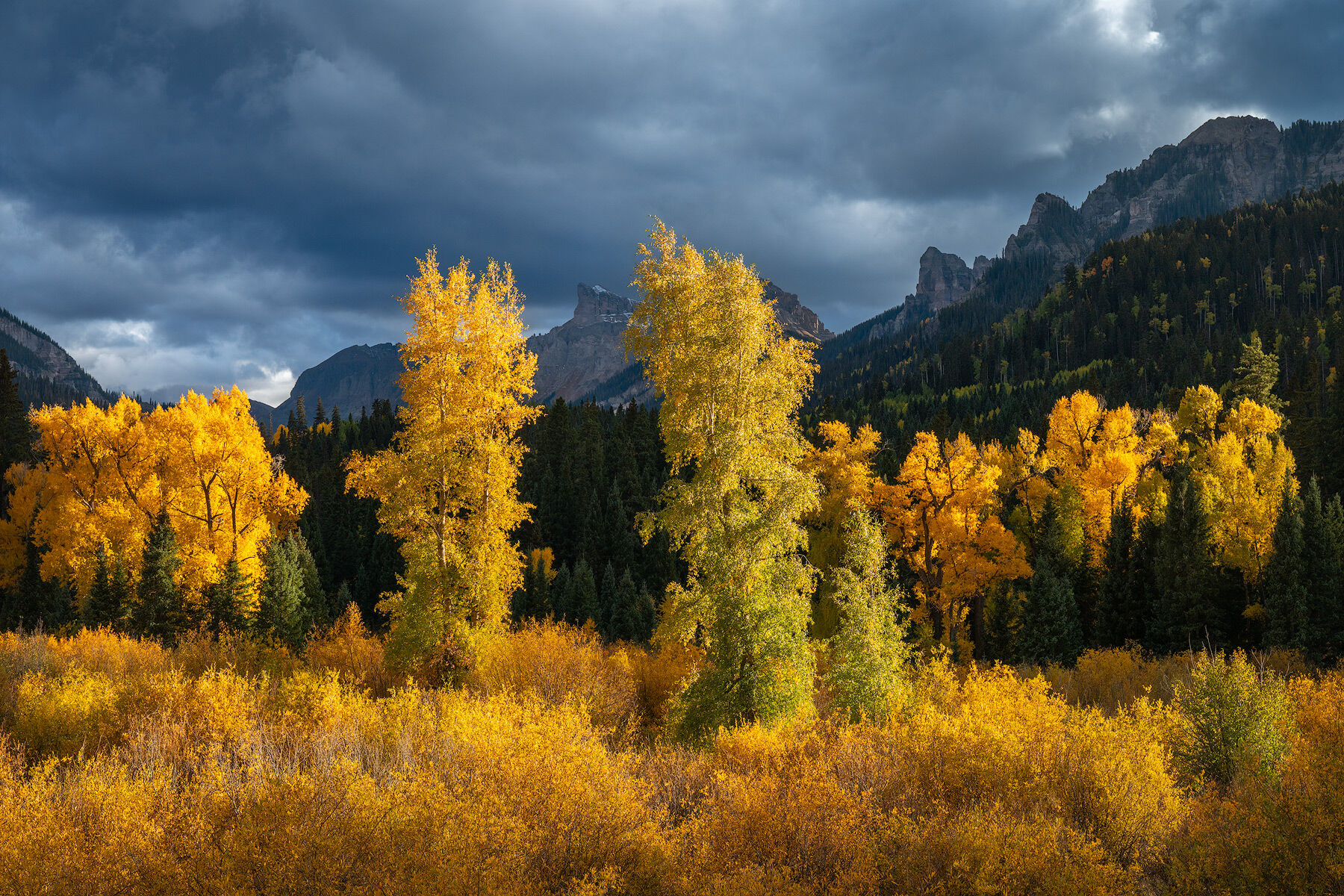
Storm clouds gather above the mountains as a break in the light illuminates the cottonwoods below, setting their autumn foliage ablaze against the darkened landscape. Moments like this are what make fall photography so compelling—the combination of seasonal color, changing weather, and fleeting light can transform an already beautiful landscape into something extraordinary.
San Juan Mountains, Colorado
Autumn has always been one of my favorite seasons to photograph. For a few short weeks each year, familiar landscapes are completely transformed by color. Mountainsides that normally blend together in endless shades of green suddenly become mosaics of yellow, orange and red. Forests glow beneath soft overcast skies, streams become surrounded by fallen leaves, and even the smallest scenes on the forest floor can become compelling photographic subjects. There is an incredible amount of visual possibility packed into a relatively short period of time.
After many years of photographing fall color, however, I've come to realize that the season is about much more than simply finding colorful trees. Some of my favorite autumn photographs aren't really about fall color at all. They are about relationships within the landscape: a single yellow tree surrounded by darker trunks, leaves caught in a quiet pool beside a stream, reflections broken apart by moving water, or layers of mountains slowly disappearing into fog. Autumn gives us an enormous amount of visual information to work with, and the real challenge is learning how to organize all of that information into a meaningful photograph.
When I'm working a landscape during the fall, I often begin by looking outward. I'm searching for the big picture—the mountains, valleys, ridges and sweeping displays of color that immediately communicate the scale and beauty of the season. As I spend more time in a location, though, my attention gradually begins moving inward. Mountains become hillsides, hillsides become forests, forests become individual trees, and eventually my attention may settle on streams, leaves, reflections, patterns and abstractions. This progression from the grand landscape to the intimate landscape has become one of my favorite ways to work during autumn, and it continually reinforces something I've come to believe more strongly with every year I spend behind a camera: successful landscape photography isn't simply about being somewhere beautiful. It's about learning how to see.
Beginning With the Grand Landscape
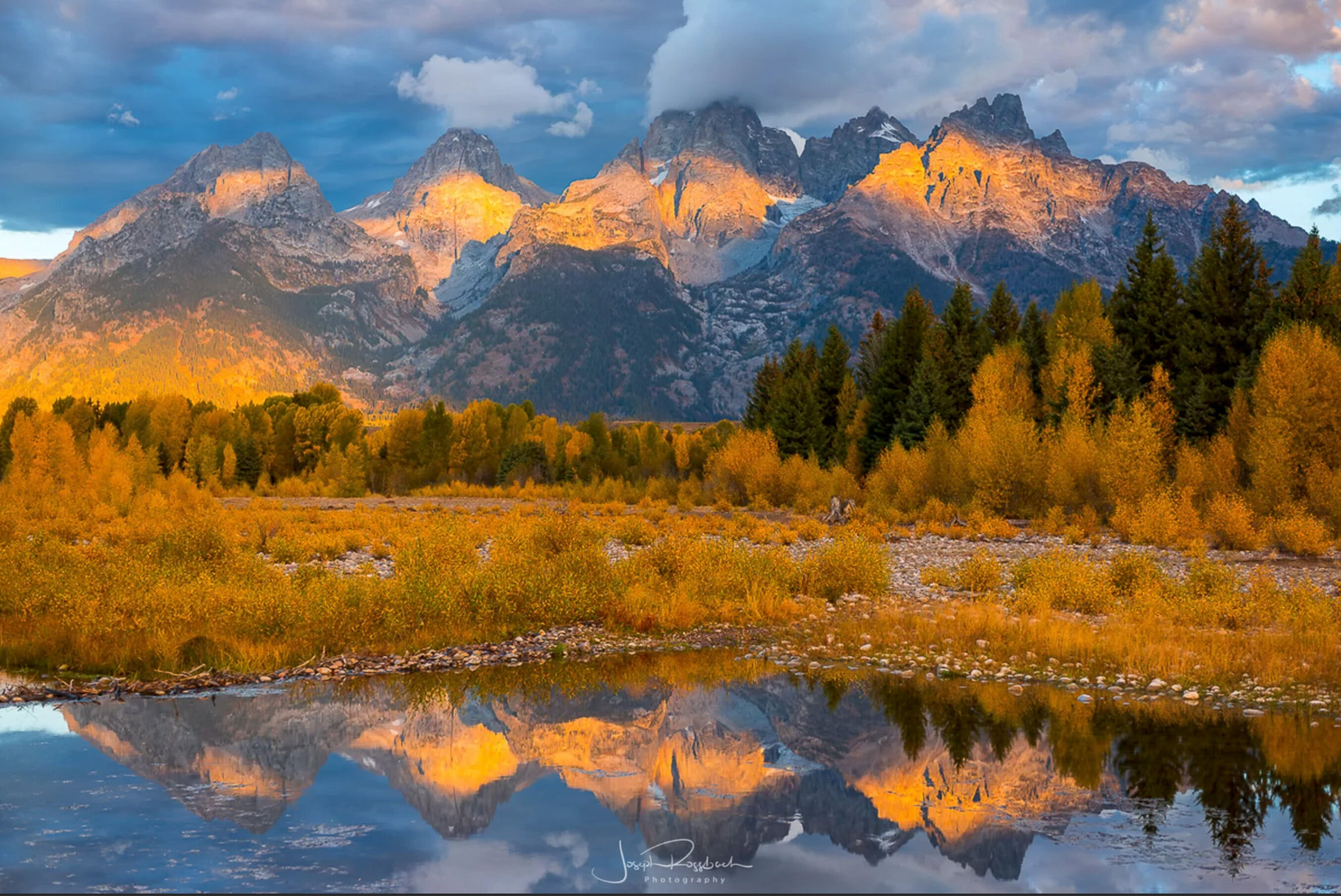
At sunrise, the grand landscape comes alive as warm light sweeps across the Teton Range, autumn color fills the valley, and calm water reflects the scene below. Working with a wide view allows each element—sky, mountains, forest, foliage, and reflection—to become part of a layered composition that conveys the scale and drama of the landscape.
Grand Teton National Park, Wyoming
There is something undeniably powerful about standing before an expansive autumn landscape. A mountain valley filled with color beneath dramatic clouds can immediately stop you in your tracks. These are the scenes that initially draw many photographers into landscape photography, and for good reason. The grand landscape gives us an opportunity to communicate scale and atmosphere in a way few other subjects can. Mountains rise above forests, rivers wind through valleys, layers of ridges disappear toward the horizon, and autumn color can spread across enormous areas of terrain.
Photographing these scenes successfully requires more than simply pointing a wide-angle lens toward an impressive view. Whenever I arrive at a location, I try to determine what actually attracted me to the scene. Is it the mountains themselves, the fall color, the quality of the light, the clouds, a winding river, or perhaps one particular group of trees? Even within an enormous landscape, the photograph still needs some type of visual anchor or hierarchy. Without it, the viewer is presented with a great deal of beautiful information but no clear reason to move through the frame.
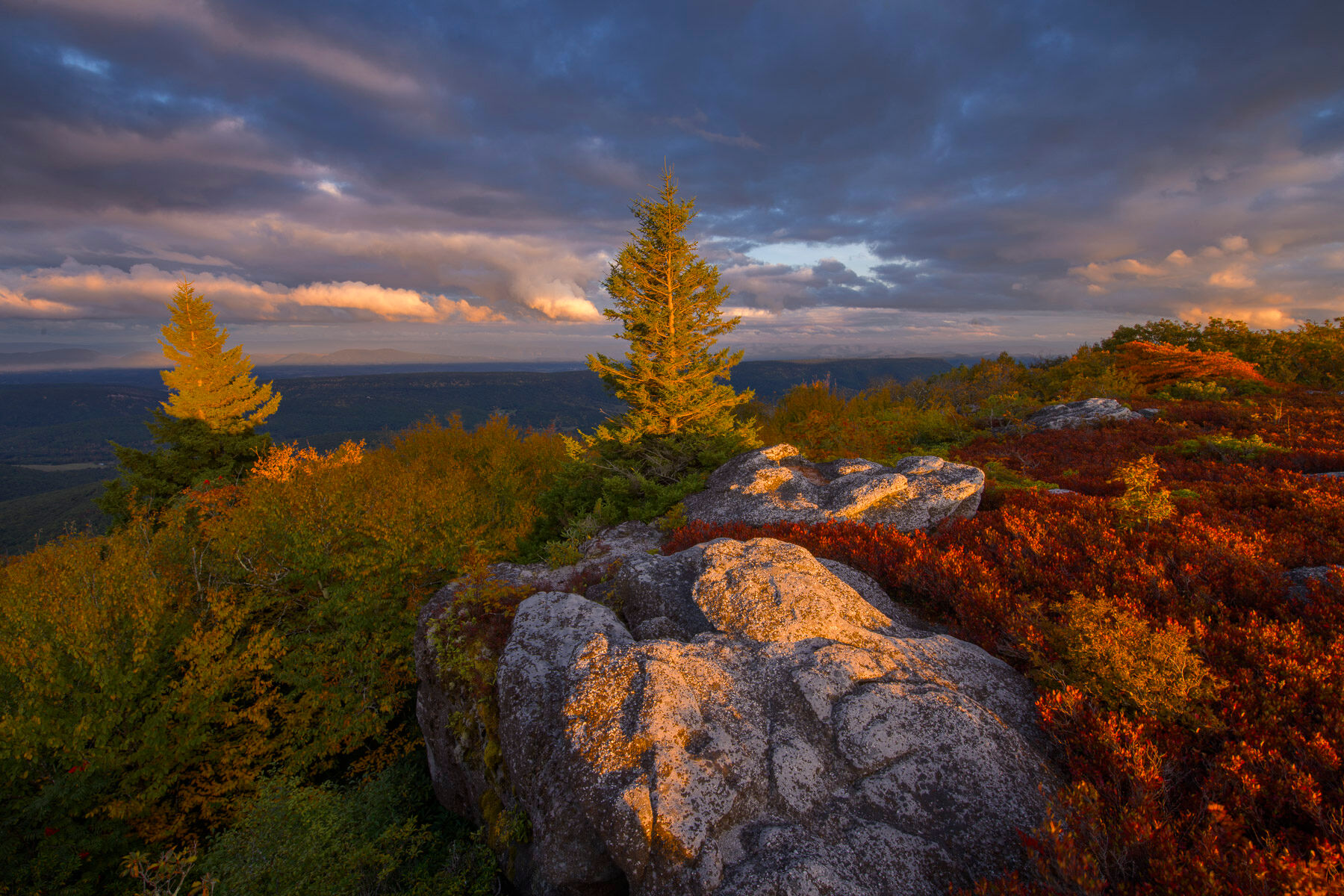
A grand landscape is often built through layers, and autumn provides an incredible palette for separating them. Here, warm evening light moves across the rocky foreground and fall foliage, while the distant ridges and dramatic sky create depth, scale, and a strong sense of place.
Bear Rocks, Dolly Sods Wilderness, West Virginia
Autumn makes this especially challenging because there can be so much happening at once. Color is everywhere, clouds may be moving overhead, light is changing quickly and nearly every direction can seem worthy of a photograph. The temptation is to include everything simply because everything looks beautiful. Instead, I try to determine how much of the landscape I actually need to communicate what attracted me to the scene in the first place. Sometimes that means using a wide-angle lens and embracing the scale of the environment. Other times, the stronger composition is found by reaching for a longer focal length and eliminating half of what initially caught my attention.
Moving From Mountains to Hillsides
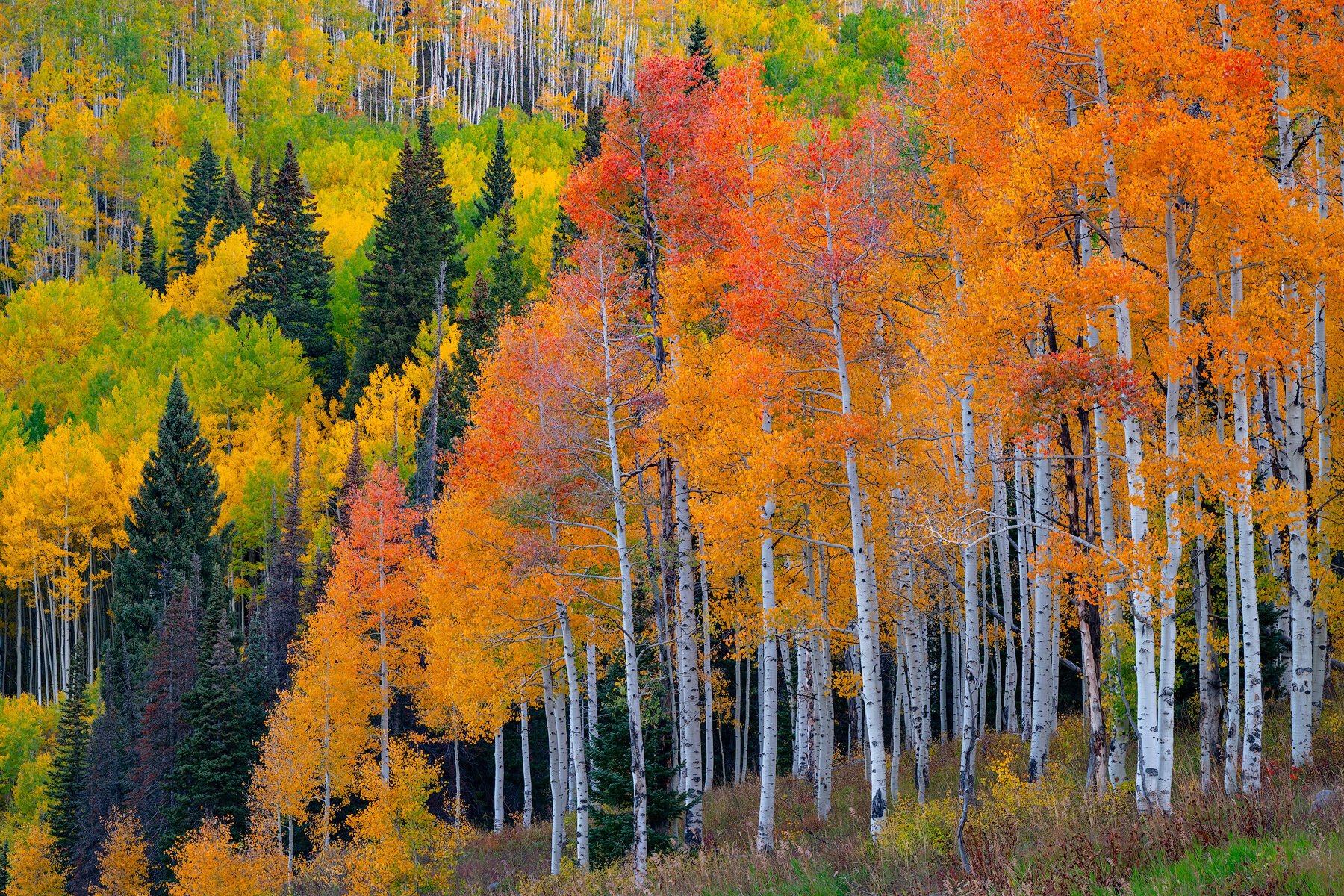
Moving beyond the sweeping mountain vista, autumn begins to reveal itself in the patterns and layers of the hillsides. Aspen, evergreens, and changing foliage overlap in a tapestry of yellow, orange, red, and green, creating compositions that rely less on dramatic scale and more on rhythm, repetition, and color.
White River National Forest, Colorado
Once I've photographed the larger landscape, I often begin searching the surrounding hillsides. This is where autumn becomes particularly interesting because a distant mountainside may contain thousands of individual trees, yet from far away those trees begin to merge into shapes, colors and patterns. The landscape becomes less literal. Instead of seeing individual trees, I begin seeing arrangements of color, repeating shapes and visual relationships.
A patch of yellow foliage might create a diagonal line across a darker hillside. A group of red maples may interrupt an otherwise green forest, while evergreens can form repeating vertical shapes within a hillside filled with deciduous color. These relationships can be difficult to recognize when looking at the entire landscape, which is why longer focal lengths become so useful. I use telephoto lenses extensively during autumn because they allow me to isolate small sections of a much larger scene and remove everything that isn't contributing to the photograph.
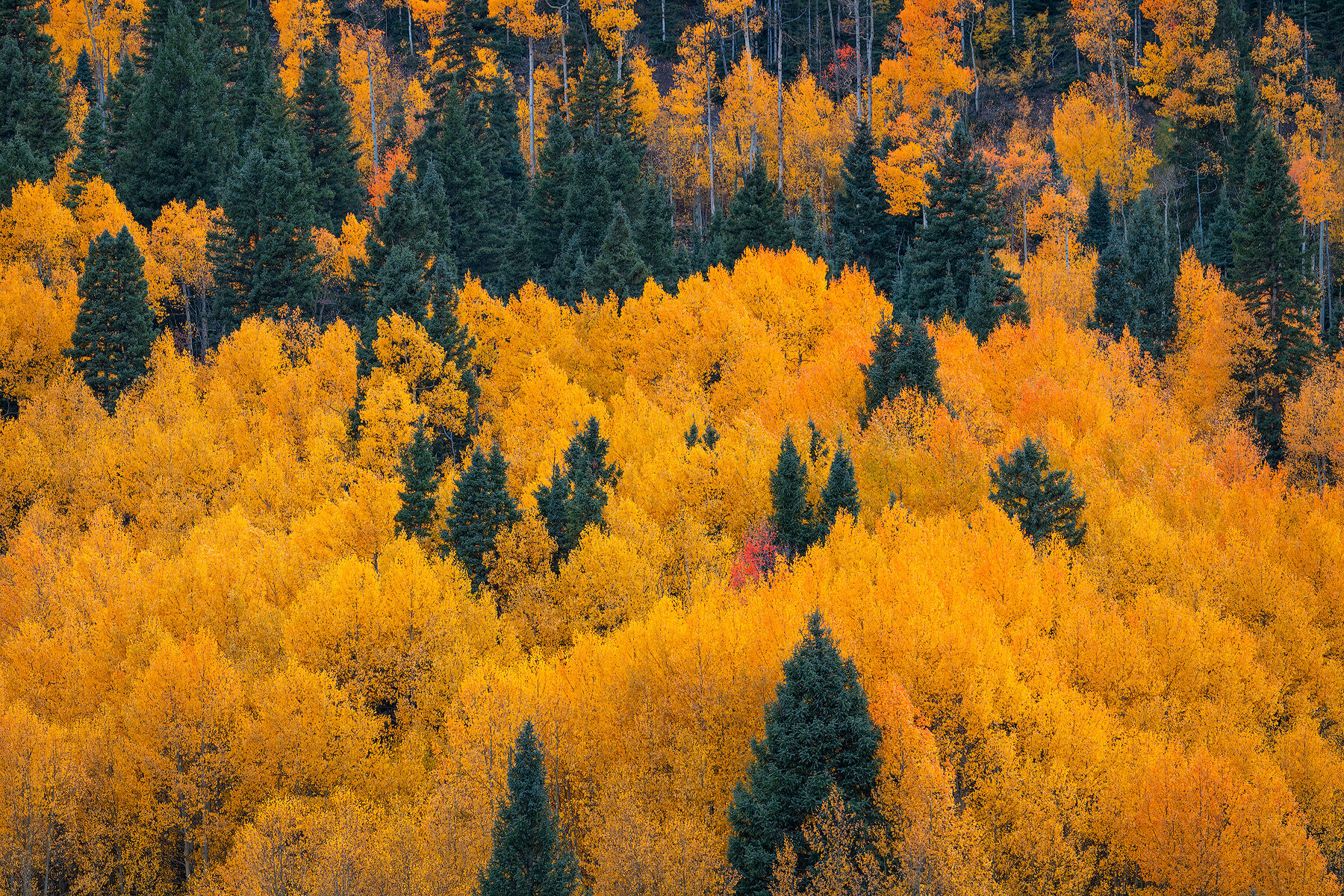
By isolating a section of the hillside, the landscape becomes less about place and more about color, form, and texture. Brilliant aspens weave between dark evergreens, creating layers of contrast and repetition that transform a complex forest into a study of autumn’s visual rhythms.
San Juan National Forest, Colorado
A 100–400mm lens can transform a single mountainside into dozens of potential compositions. Instead of documenting the entire scene, I can search for color against color, warm foliage against cool rock, bright trees surrounded by darker forest, repeating patterns or layers created by atmospheric conditions. I often spend a considerable amount of time simply scanning a hillside through the viewfinder without taking a picture. As I slow down, small arrangements begin revealing themselves that weren't obvious at first glance. This is one of the great lessons of autumn photography: the obvious photograph may be immediately visible, but the more interesting composition often takes time to discover.
Stepping Into the Forest
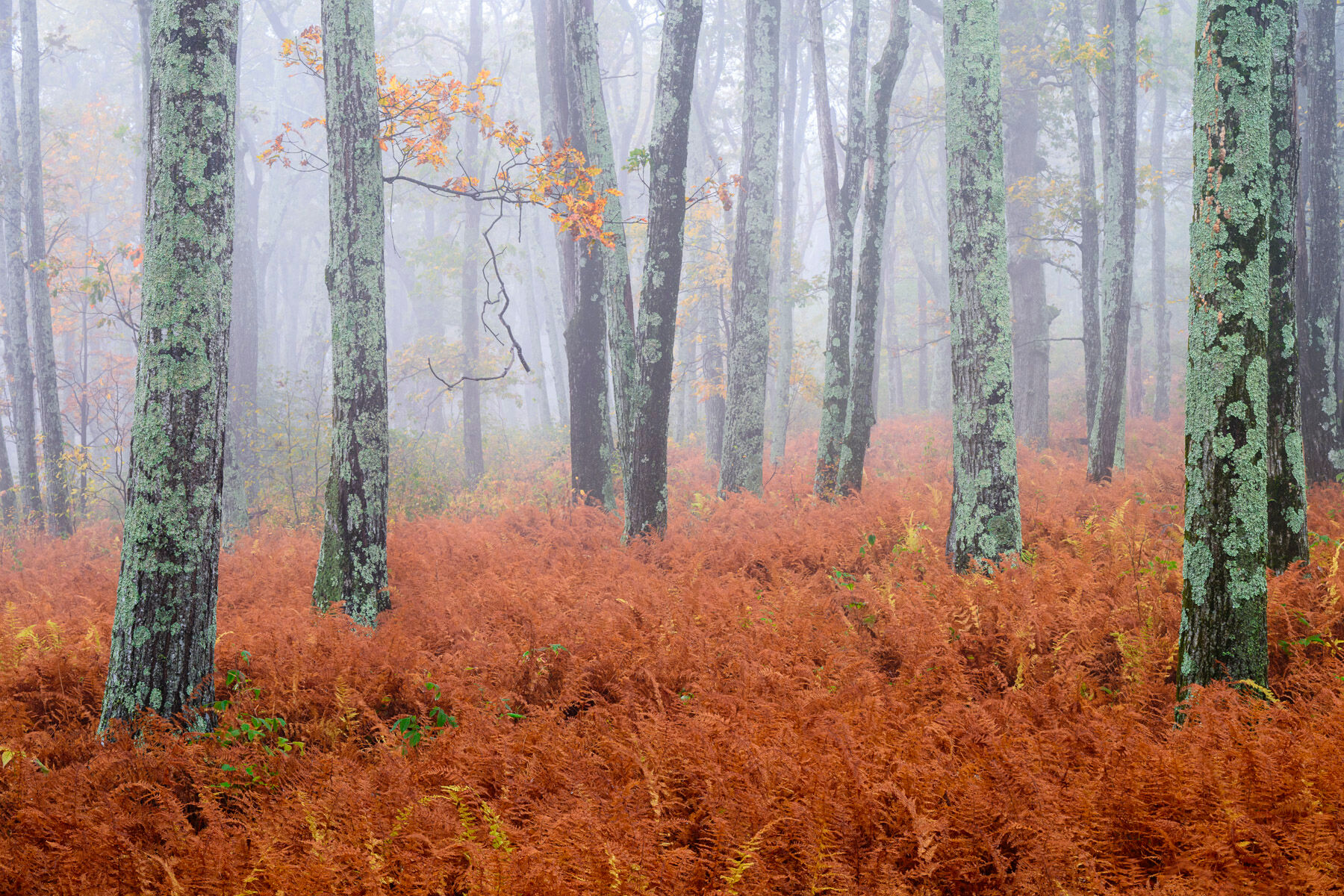
Stepping into the forest shifts our attention from expansive views to the quieter relationships between trees, color, texture, and atmosphere. Here, autumn ferns carpet the forest floor while fog softens the repeating trunks, simplifying the woodland and creating a wonderful sense of depth and mystery.
Shenandoah National Park, Virginia
Moving from a distant hillside into the forest changes the photographic experience completely. The horizon disappears, the sky may disappear, and the enormous landscape that initially attracted us to the location is replaced by trunks, branches, leaves, rocks, ferns and overlapping layers of vegetation. Forests can be incredibly beautiful during autumn, but they can also be some of the most difficult environments to compose successfully because almost everything overlaps with something else.
The solution, at least for me, is not to photograph more but to eliminate more. I become extremely conscious of the edges of the frame and the relationships between individual elements. A bright branch entering from a corner can pull attention away from the subject. A small opening of white sky between the trees can suddenly become the brightest and most distracting part of the photograph. Two trunks that look perfectly separated from one position may merge awkwardly when the camera moves only a few inches.
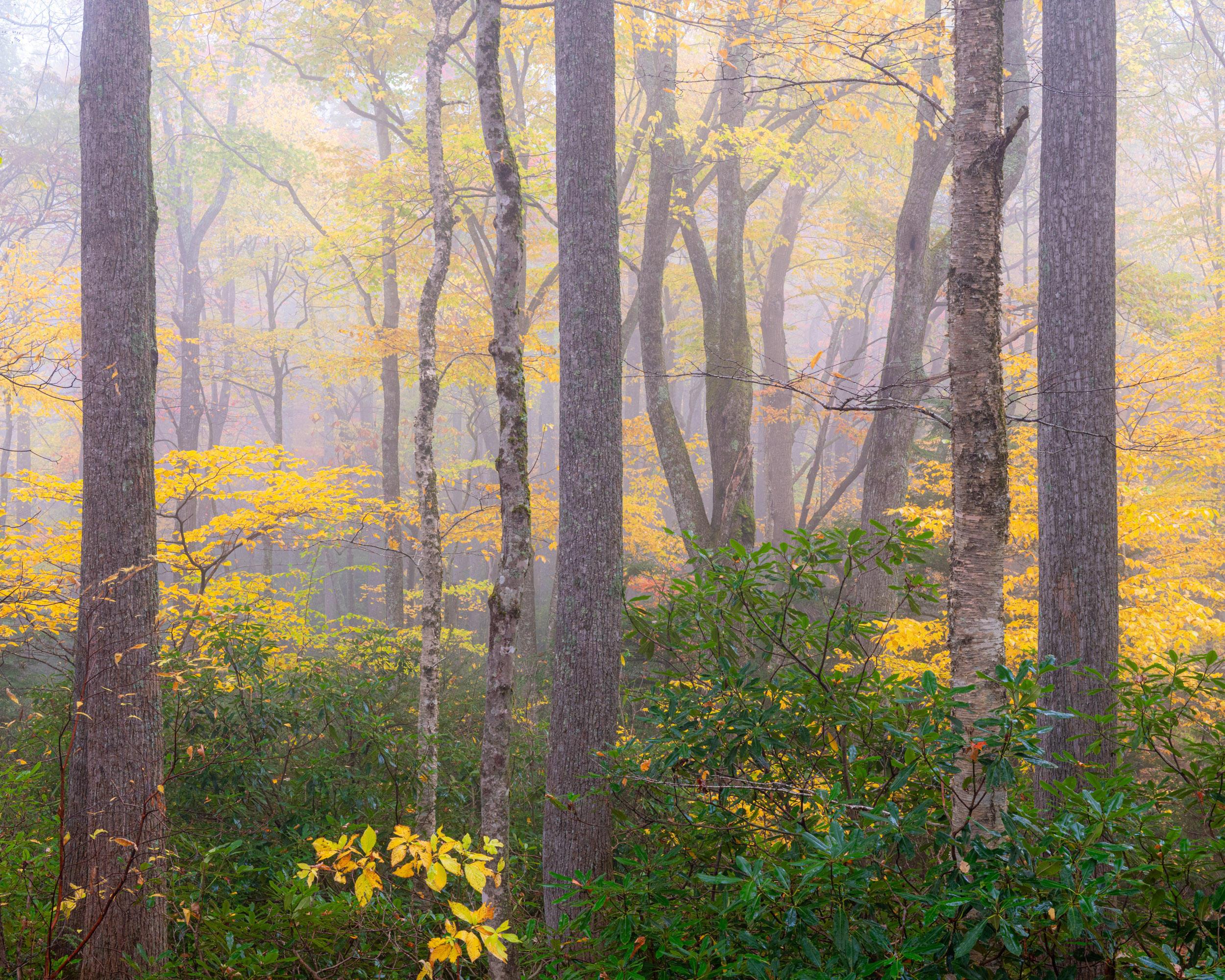
Fog brings order to the complexity of an autumn forest, gradually softening trees and color as they recede into the distance. Repeating trunks provide structure, while layers of yellow foliage and deep green rhododendron create contrast, depth, and a quieter sense of the season.
Blue Ridge Parkway, North Carolina
Small adjustments can make an enormous difference in these environments. Moving the tripod slightly to one side can separate overlapping trees. Raising or lowering the camera can simplify the background, while moving forward may eliminate distracting elements entirely. This is why forest photography rewards patience. You're rarely just finding a composition and pressing the shutter. You're refining relationships within the frame until the visual chaos begins to feel organized.
Soft, diffused light can be particularly effective in these environments. Bright midday sunlight filtering through a forest often creates a difficult mixture of deep shadows and harsh highlights, while overcast skies, fog and light rain can dramatically simplify the light. Colors become richer, contrast becomes easier to control, and small details that might otherwise disappear begin to reveal themselves. Some of my favorite autumn forest conditions are the ones many people would describe as bad weather.
Finding the Individual
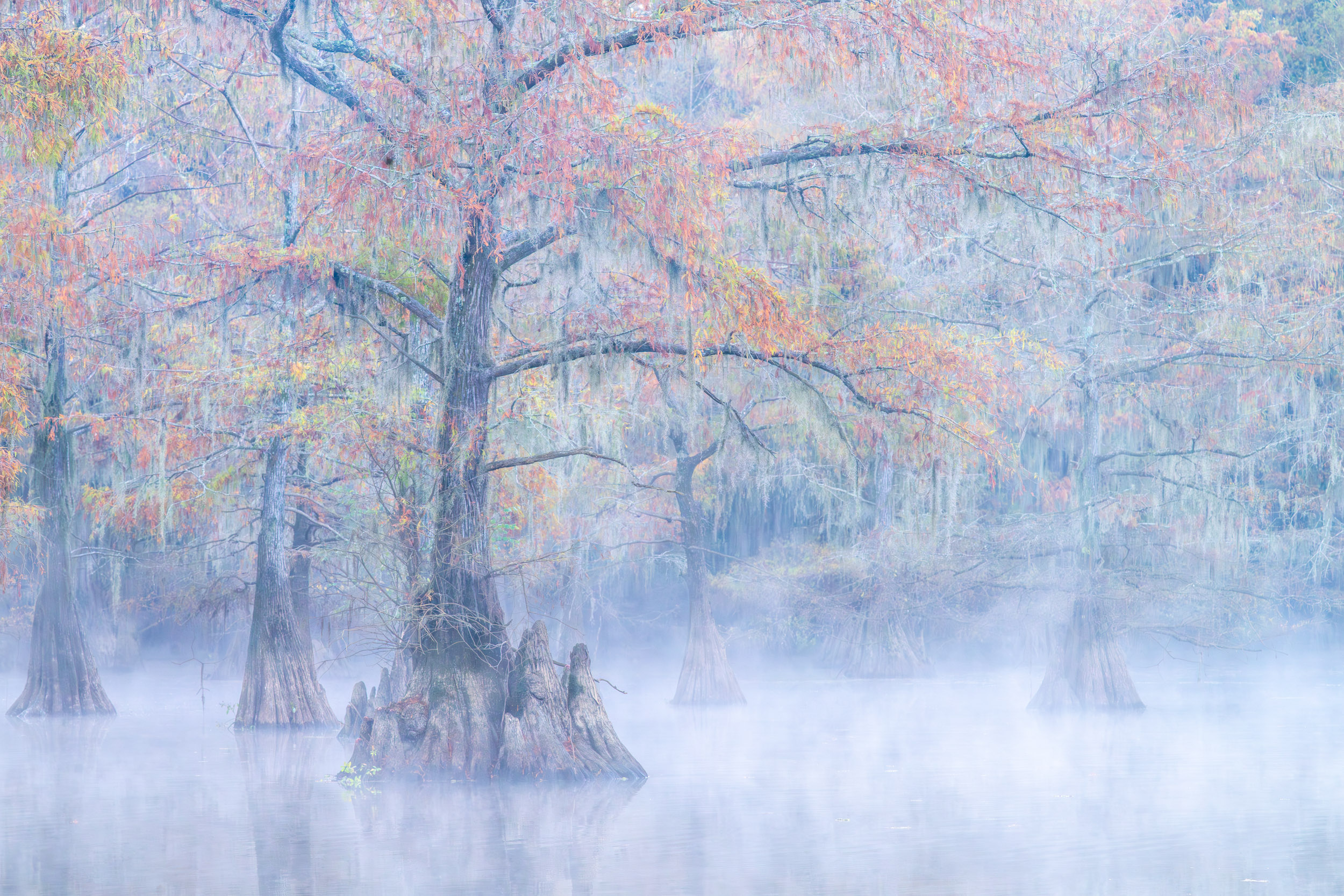
As the view becomes more intimate, a single tree can emerge as the subject within an otherwise complex landscape. Here, the massive cypress and its reaching branches provide a visual anchor, while autumn color, Spanish moss, and drifting fog soften the surrounding trees and allow the individual form to stand apart.
Big Cypress Bayou, Texas
As I spend more time working inside a forest, the larger scene often begins breaking apart into individual subjects. One tree may suddenly become more important than everything surrounding it. Perhaps its leaves are brighter, its trunk has an interesting shape, or it is catching soft light while the surrounding forest remains darker. Sometimes the only thing that makes it special is enough separation from the background to allow it to command attention.
These are some of my favorite autumn photographs because a single tree can communicate the season just as effectively as an entire mountainside. In some cases it can communicate it more effectively because isolation gives the viewer somewhere specific to look. The surrounding forest still matters, but now it becomes supporting information rather than the primary subject.
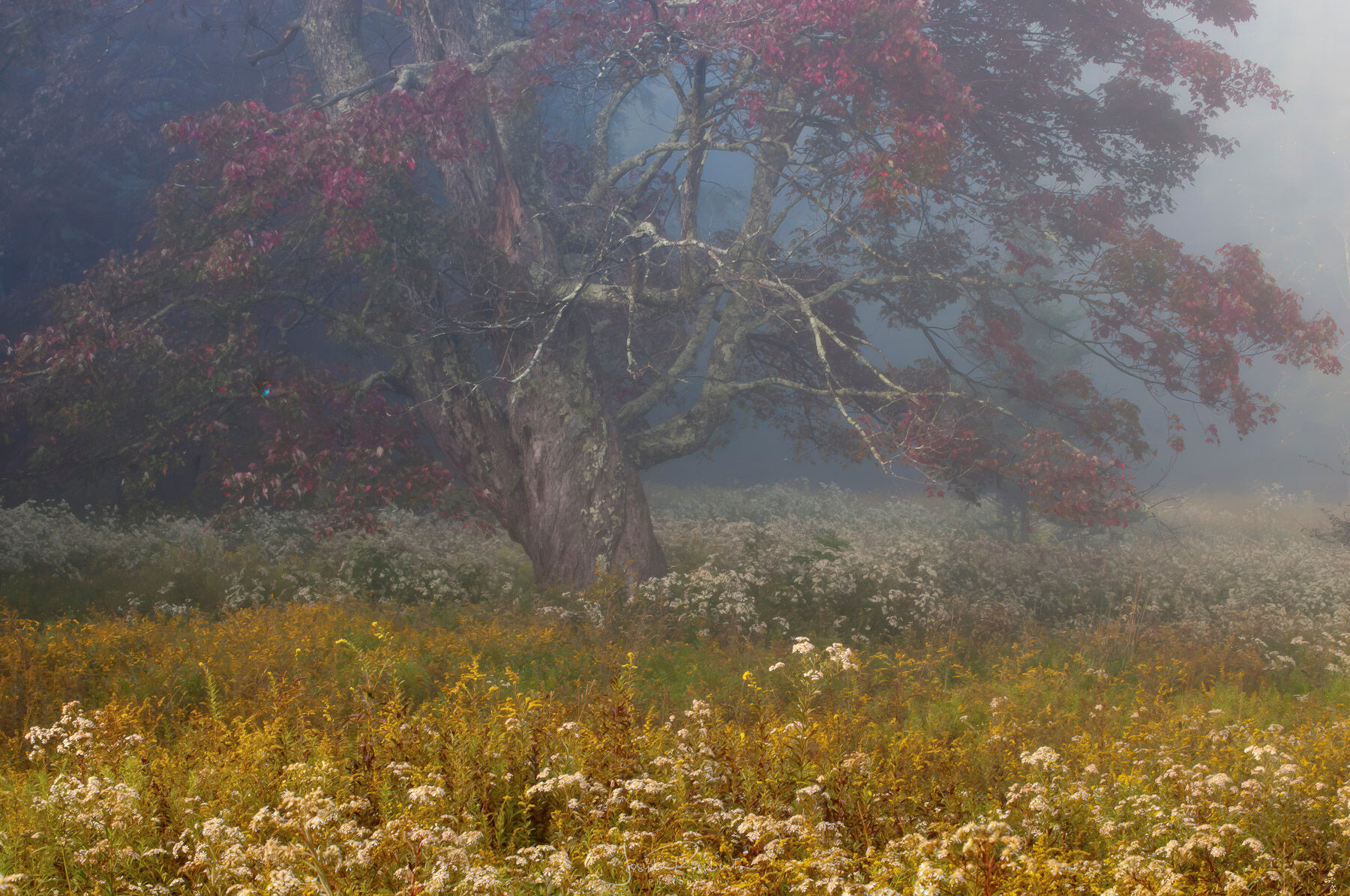
Isolating a single tree allows its individual character to become the story. This ancient maple, shaped by time and weather, reaches outward through the autumn mist, its deep crimson leaves and twisting branches standing apart from the softer landscape surrounding it.
Monongahela National Forest, West Virginia
Contrast becomes incredibly useful here, and not simply contrast between light and dark. A yellow tree surrounded by darker green foliage immediately stands apart. A red maple among yellow trees can create a natural focal point. A small tree illuminated by reflected light may emerge beautifully from a shadowed woodland. The key is establishing visual hierarchy—something within the photograph needs to matter more than everything else. Once I've identified that element, the rest of the composition becomes an exercise in deciding what supports it and what distracts from it.
Following the Water
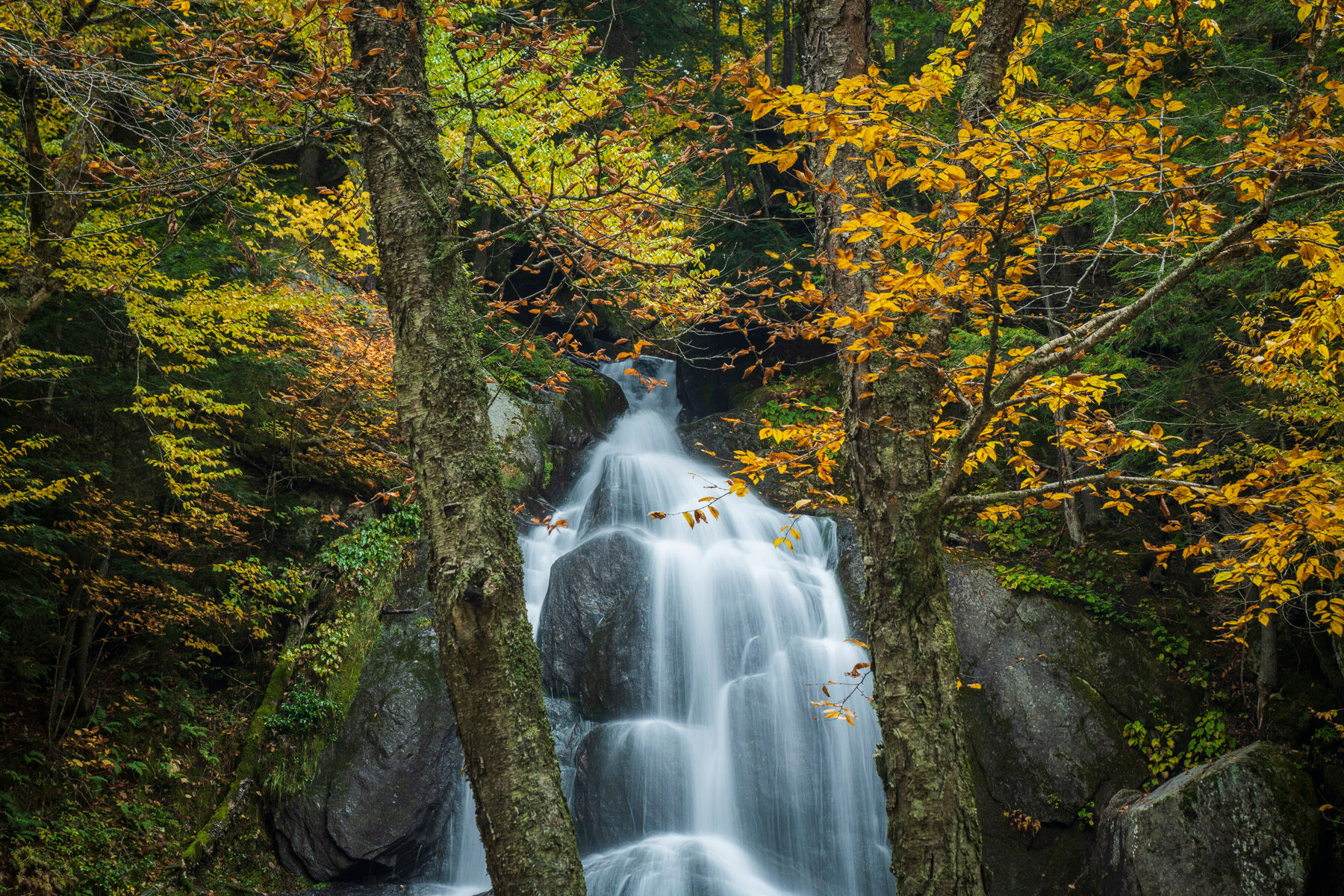
Following water deeper into the autumn landscape opens another world of photographic possibilities. Waterfalls provide natural movement and visual flow, while the surrounding trunks and colorful foliage frame the scene, allowing the eye to travel through layers of forest toward the cascading water.
Moss Glen Falls, Green Mountain National Forest, Vermont
Streams and waterfalls provide another completely different way to photograph autumn. Water introduces movement into a season that we often associate primarily with color. A stream can lead the eye through a forest, waterfalls can become bright visual anchors surrounded by darker foliage, wet rocks can reflect the color of nearby trees, and fallen leaves collect in eddies, cracks and quiet pools.
This is one reason I rarely consider rain to be bad weather during an autumn photography trip. Wet foliage often appears richer and more saturated, reflections become stronger, waterfalls gain volume, and dark tree trunks contrast beautifully with colorful leaves. Overcast conditions also reduce the harsh contrast that can make forest photography difficult. Instead of fighting bright highlights and deep shadows, we're often able to work with a softer and more manageable range of light.
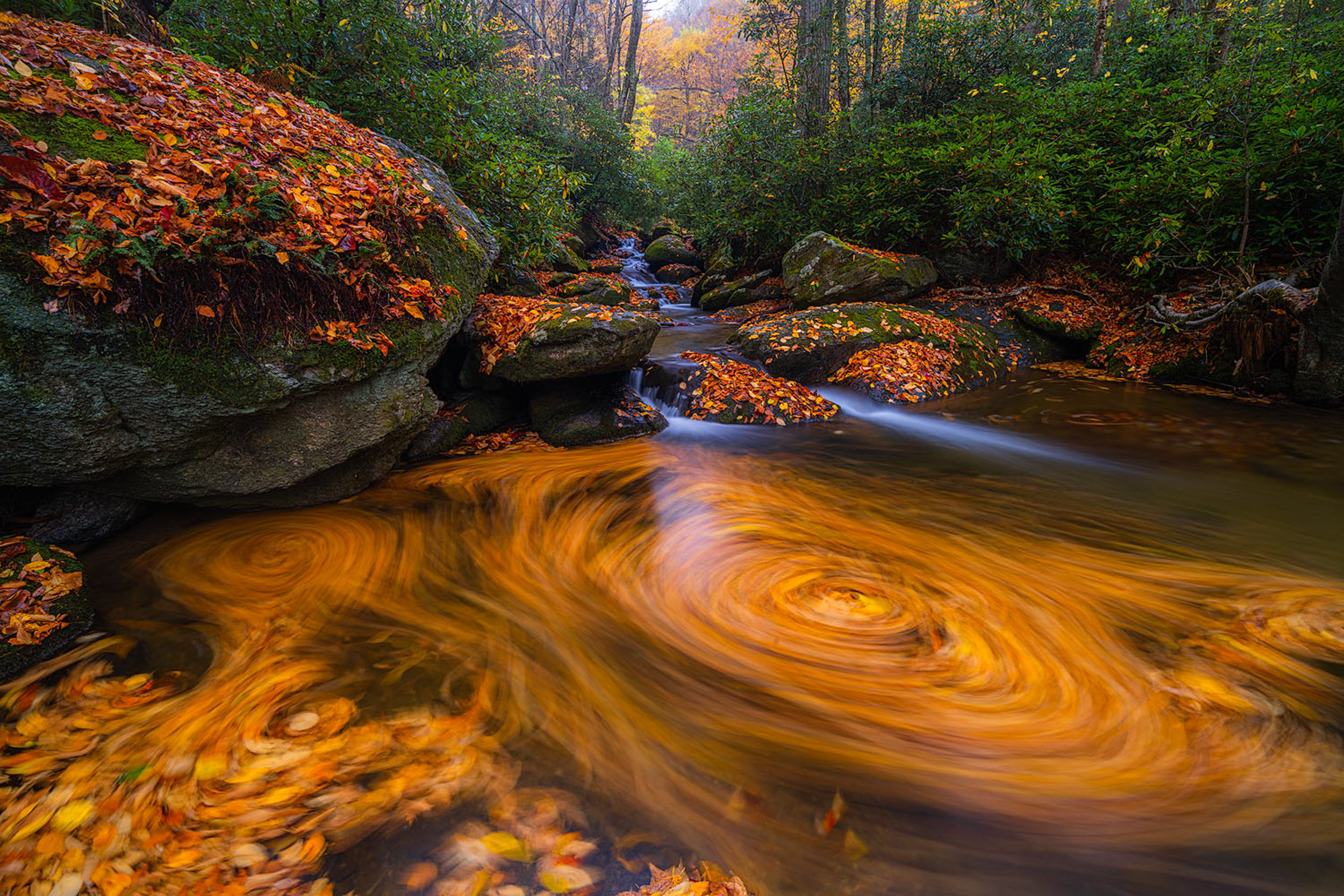
Autumn leaves become part of the water itself as the current gathers them into swirling eddies and repeating patterns. A longer exposure transforms their movement into sweeping circles of color, turning a small woodland stream into an abstract study of motion, rhythm, and the changing season.
Cherokee National Forest, North Carolina
A polarizing filter is one of the most useful tools I carry in these situations. By controlling reflections on wet foliage, rocks and the surface of the water, a polarizer can reveal deeper color and reduce distracting glare. I don't automatically rotate the filter to maximum polarization, though. Reflections are part of the landscape, and sometimes they are exactly what makes a photograph work. The goal is not necessarily to eliminate reflections but to control them, carefully watching how the scene changes as the filter is rotated.
Shutter speed becomes another creative decision around moving water. There is no single correct shutter speed for waterfalls and streams. Sometimes I want enough movement to create a sense of flow while still retaining texture in the water. Other times a longer exposure may simplify the scene and create a quieter feeling. The important thing is that the water supports the mood of the photograph rather than becoming a technique for its own sake.
Learning to Look Down
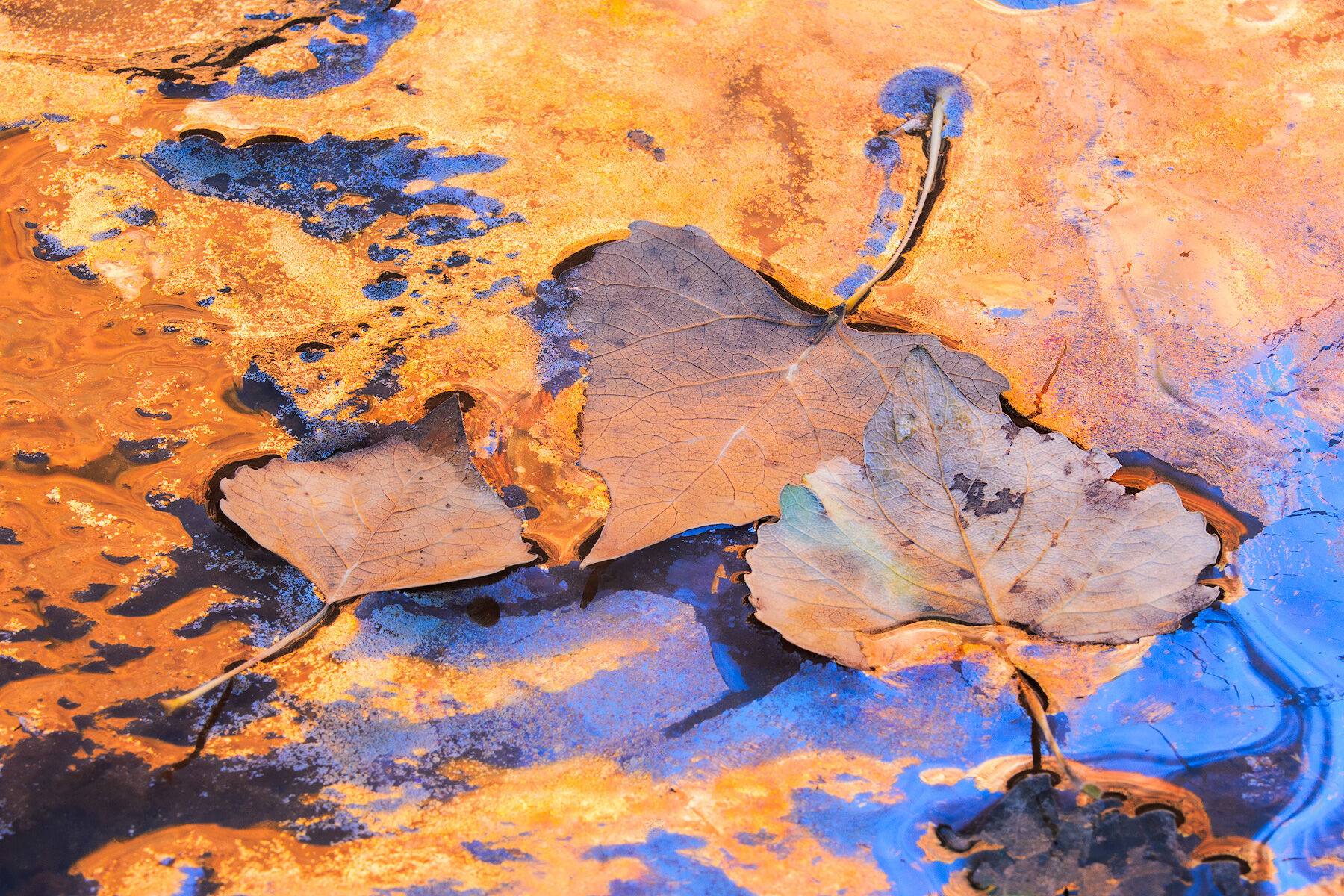
Some of autumn’s most compelling photographs are found not by looking toward the horizon, but by looking down. Fallen leaves, reflections, foam, and subtle patterns on the water’s surface transform a small patch of stream into an abstract landscape of color, shape, and texture.
Zion National Park, Utah
One of the simplest things a landscape photographer can do during autumn is also one of the easiest to forget: look down. The forest floor can contain extraordinary compositions. Fallen leaves collect on dark rocks, gather around exposed roots, become trapped between stones, float across quiet pools and create colorful patterns against moss, mud and decaying wood.
At this point, the scale of the landscape has changed completely. We may have started the morning photographing an entire mountain range, and now the photograph might contain an area no larger than a few feet. Yet the same compositional principles still apply. Balance, visual flow, contrast, repetition, color, shape and gesture are just as important in a photograph of three leaves on a rock as they are in a sweeping mountain landscape.
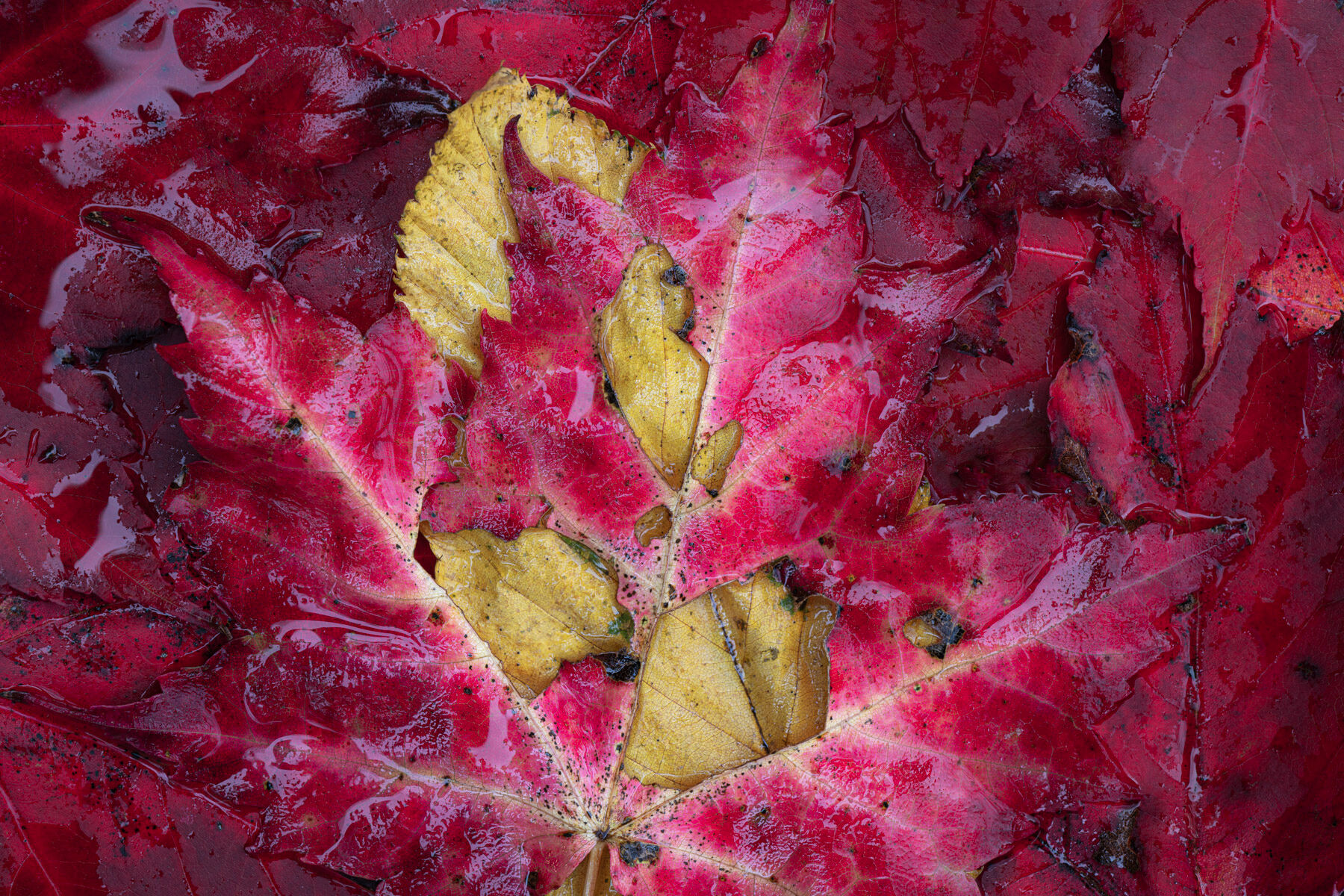
Looking down and moving closer reveals autumn at its most intimate. A single crimson maple leaf becomes a miniature landscape of its own, with smaller yellow leaves caught within its shape creating unexpected contrast, layers, and patterns that could easily be overlooked while searching for the bigger scene.
Great Smoky Mountains National Park, Tennessee
This is one of the reasons intimate landscape photography can be so rewarding. It removes our dependence on spectacular locations and dramatic conditions. You don't need an iconic overlook, an incredible sunset or even particularly dramatic weather. You need to pay attention to the landscape immediately around you. Once you begin doing that consistently, places that initially seemed photographically ordinary can become filled with possibilities.
Reflections Create Another Landscape
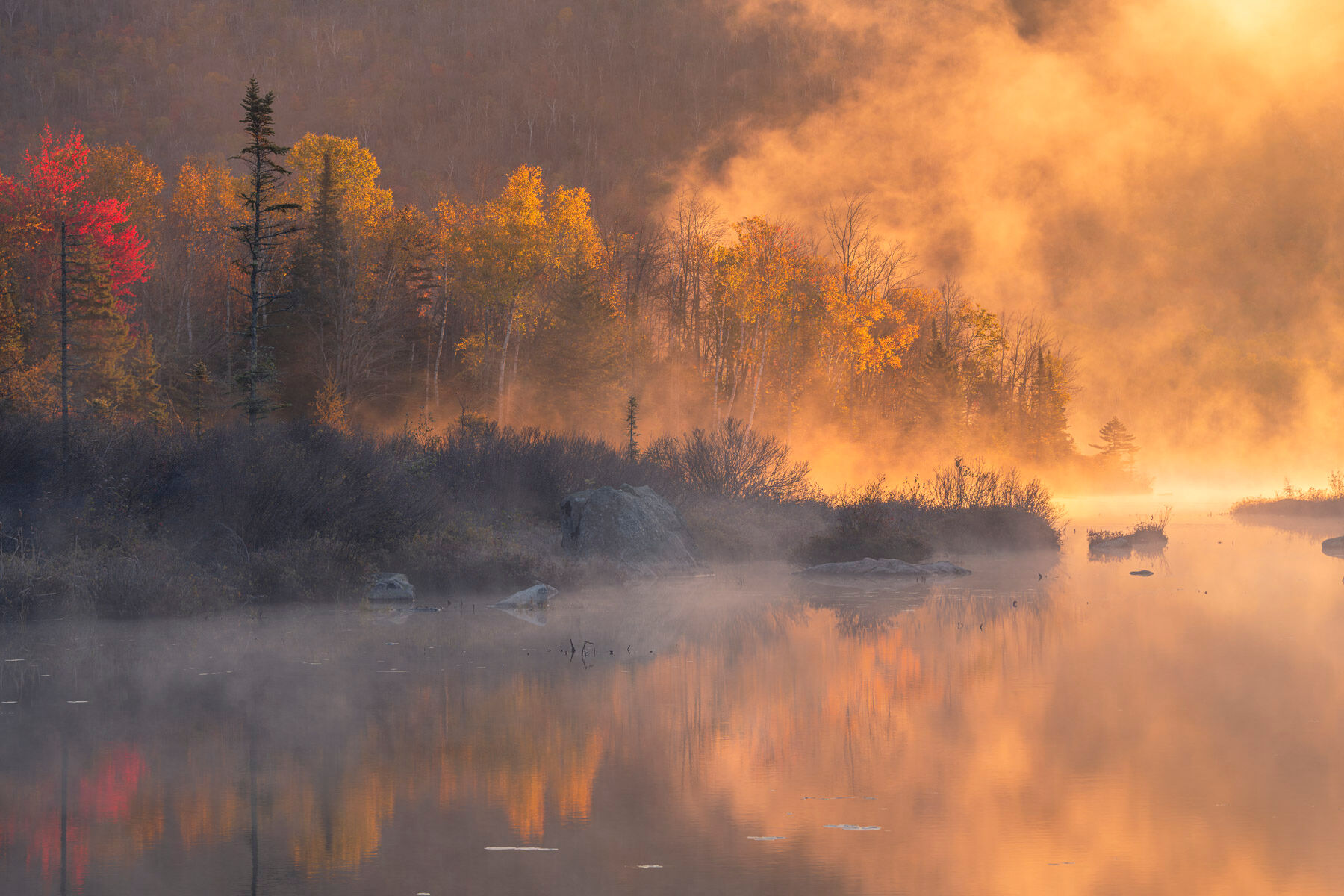
Reflections can create an entirely new landscape within the landscape, repeating color, shape, and atmosphere in the water below. Here, sunrise ignites the autumn trees and rising mist, while their softened reflections extend the scene into the water and turn a fleeting moment of light into layers of color and mood.
Grotton State Forest, Vermont
Autumn reflections are something I search for constantly, especially around streams, ponds and slow-moving sections of rivers. Still water can create an almost perfect mirror of the surrounding foliage, but I'm often even more interested when the reflection becomes distorted. Moving water stretches color into lines, small ripples break trees into fragments, and reflected yellow, orange and red foliage can mix with the blue of the sky to create combinations that don't exist anywhere else in the scene.
At this point the photograph may no longer really be about trees. It becomes a photograph about color, movement, shape and light. The identity of the landscape begins to matter less than the visual relationships occurring within the frame. These types of images are often much quieter than the grand landscapes I may have photographed earlier in the day, but they can be every bit as expressive.
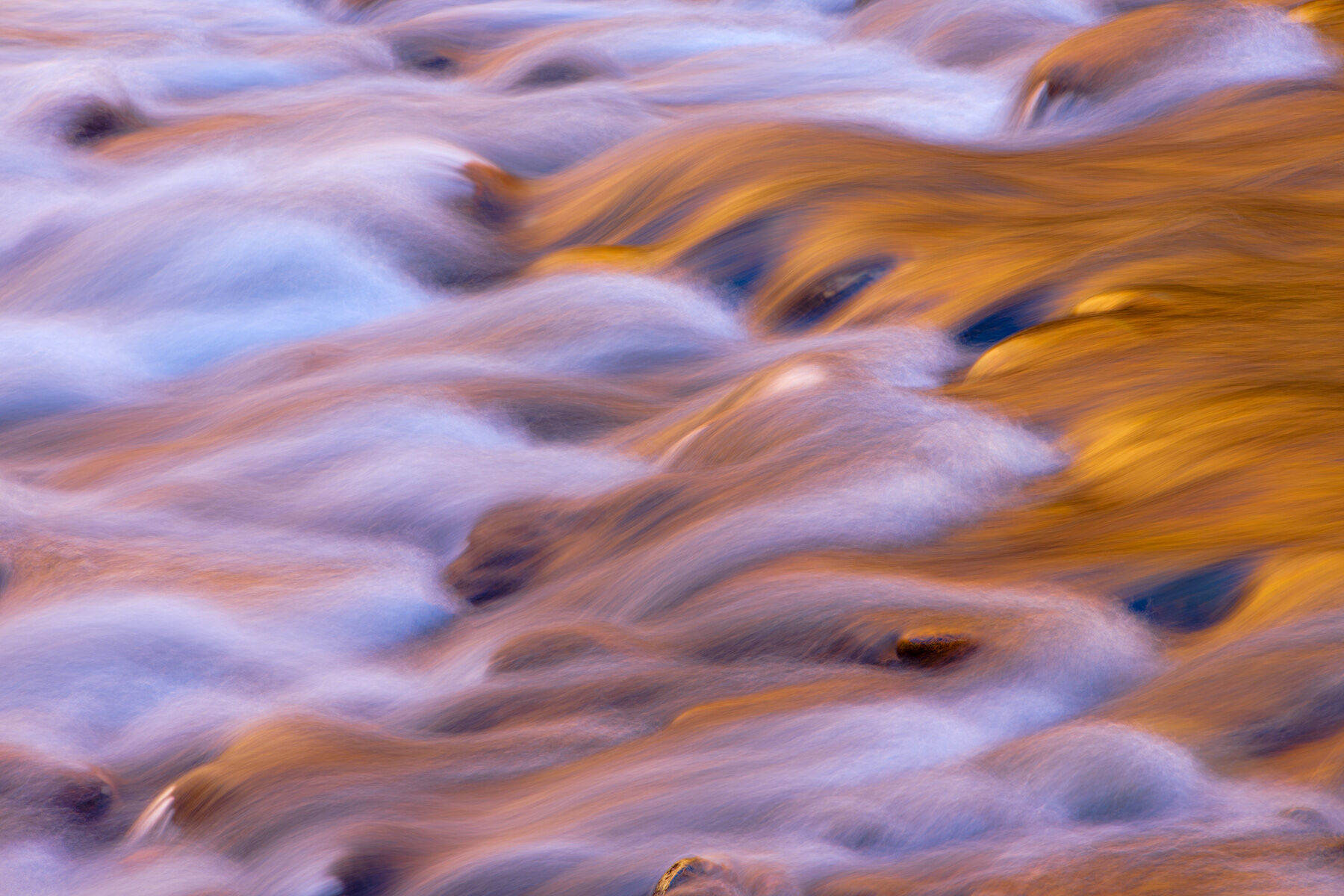
Reflections don’t always need to mirror the landscape literally. Here, autumn color reflected from the surrounding trees becomes stretched and distorted by moving water, while a longer exposure transforms the stream into flowing bands of gold, blue, and violet—an abstract interpretation of the season built entirely from light, color, and motion.
Zion National Park, Utah
Reflections also teach us to think differently about light. A section of water sitting completely in shade may reflect a brightly illuminated hillside somewhere outside the frame. That reflected light can transform an otherwise ordinary scene into something extraordinary. Instead of only asking where the light is falling, I try to pay attention to what that light is illuminating and where that illumination might be reflected. It's a subtle shift in observation, but it has led me to countless photographs I would have otherwise walked right past.
When the Landscape Becomes Abstract
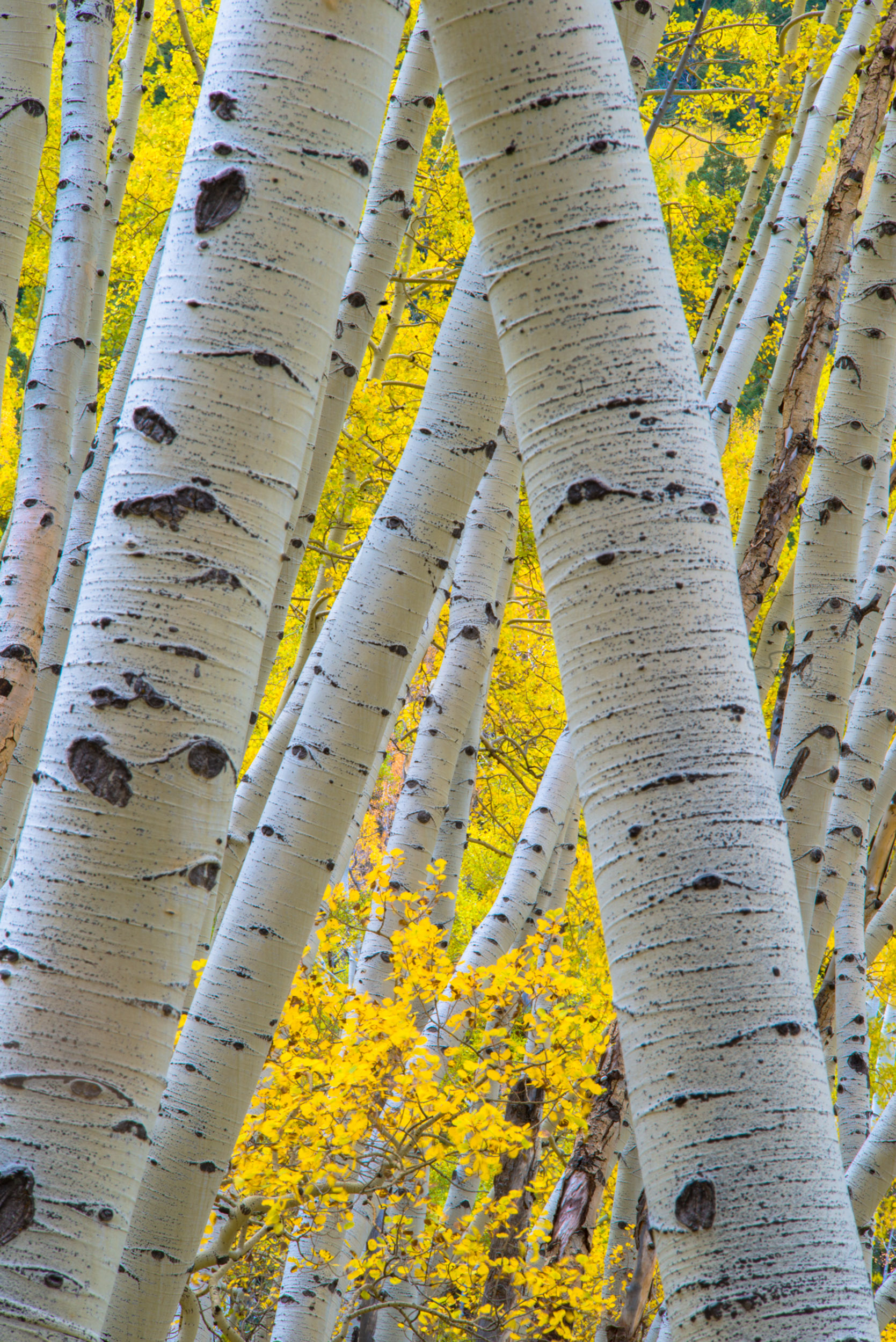
As we move closer, the landscape can begin to lose its literal identity and become something more abstract. The repeating white trunks, dark markings, and brilliant yellow foliage reduce the forest to lines, shapes, patterns, and color, creating a composition that is less about where we are and more about how the scene feels visually.
San Juan National Forest, Colorado
f we continue moving inward, recognizable subjects can eventually begin disappearing altogether. Trees become lines, leaves become shapes, water becomes color and reflections become texture. The landscape begins moving toward abstraction, and this is one of my favorite places to arrive photographically.
What I enjoy about these images is that they no longer depend on the identity or reputation of the location. The viewer may have no idea whether the photograph was made in West Virginia, Colorado, the Great Smoky Mountains or somewhere completely different. It doesn't matter. The photograph has to succeed because of color, rhythm, movement, balance, texture and light rather than because the viewer recognizes the place.

As the landscape becomes more abstract, the character of individual trees begins to matter as much as the forest itself. The sweeping curves and repeating white trunks of these aspens create a natural rhythm, while brilliant autumn foliage fills the spaces between them with color—turning the woodland into a composition built around line, repetition, form, and gesture.
San Juan Mountains, Colorado
Abstract images are often discovered rather than planned. I may notice a reflection moving across the surface of a stream or a small arrangement of leaves and begin experimenting with different compositions. The first attempt may not work, and neither may the second, but each frame teaches me something about the scene. Eventually, the subject itself becomes less important than the arrangement of elements within the frame. This is where photography begins moving away from documentation and toward interpretation.
Letting the Landscape Tell You What to Photograph
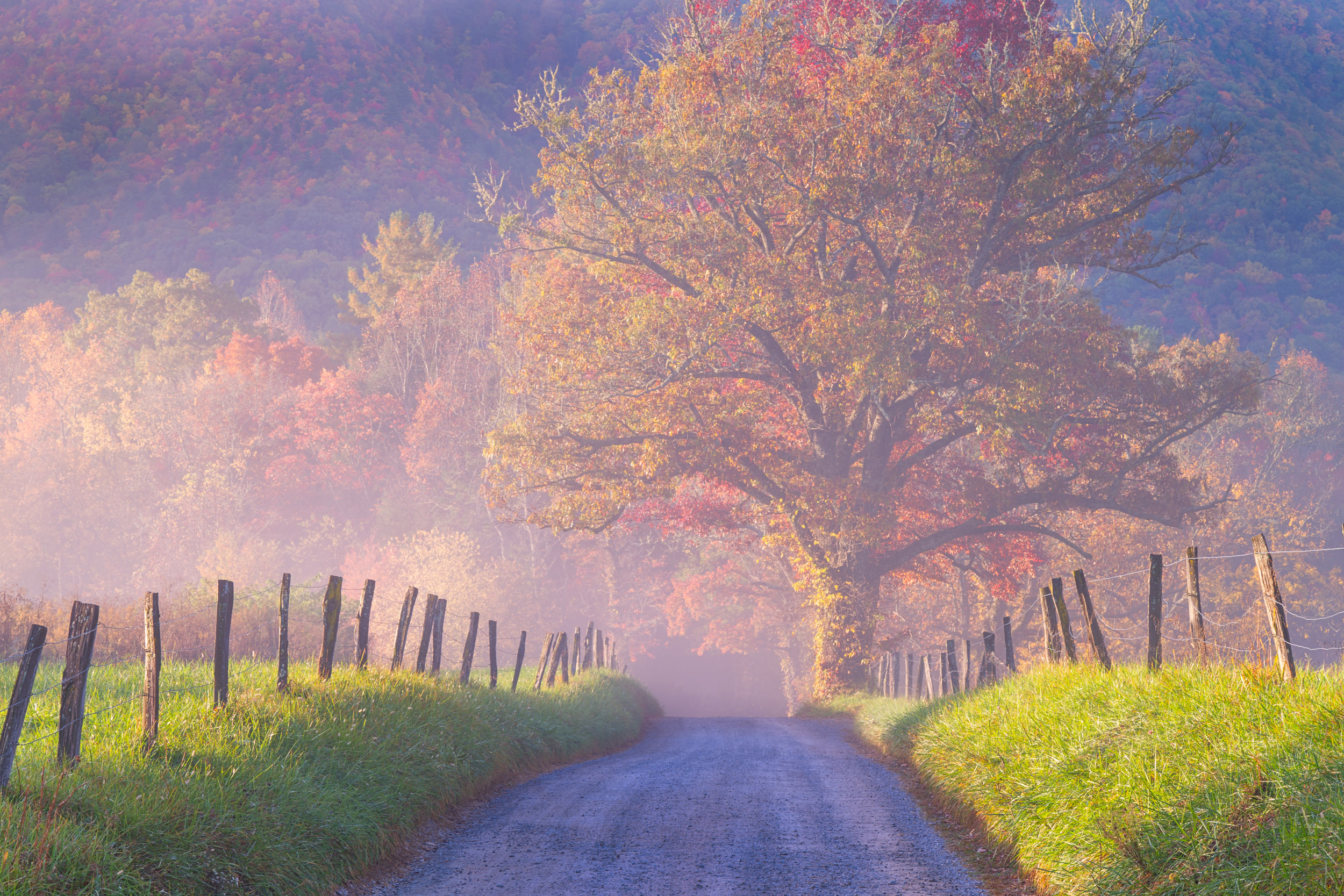
Sometimes the strongest photographs come from responding to what the landscape gives you rather than searching for a predetermined image. Here, morning fog, soft autumn color, converging fence lines, and a country road naturally lead the eye toward the glowing tree—an unexpected composition created by simply observing how light and atmosphere were shaping the scene.
Great Smoky Mountains National Park, Tennessee
One of the biggest changes in my photography over the years has been learning not to arrive at a location with a predetermined photograph in mind. Of course I research locations, watch the weather, follow fall-color reports, scout potential compositions and think about sunrise and sunset angles. Preparation matters, especially during a season as short and unpredictable as autumn. Once I'm standing in the landscape, however, I try to respond to what is actually happening rather than what I hoped would happen.
If the mountains are completely covered in fog, the grand landscape I planned to photograph may not be available, but the forest may be incredible. If heavy clouds eliminate the sunrise, waterfalls and intimate scenes may suddenly become the better option. If wind makes photographing foliage difficult, perhaps moving leaves or reflections can become part of the photograph rather than something to fight against. If peak color hasn't arrived, a single early-turning tree may provide a stronger subject than the entire landscape.
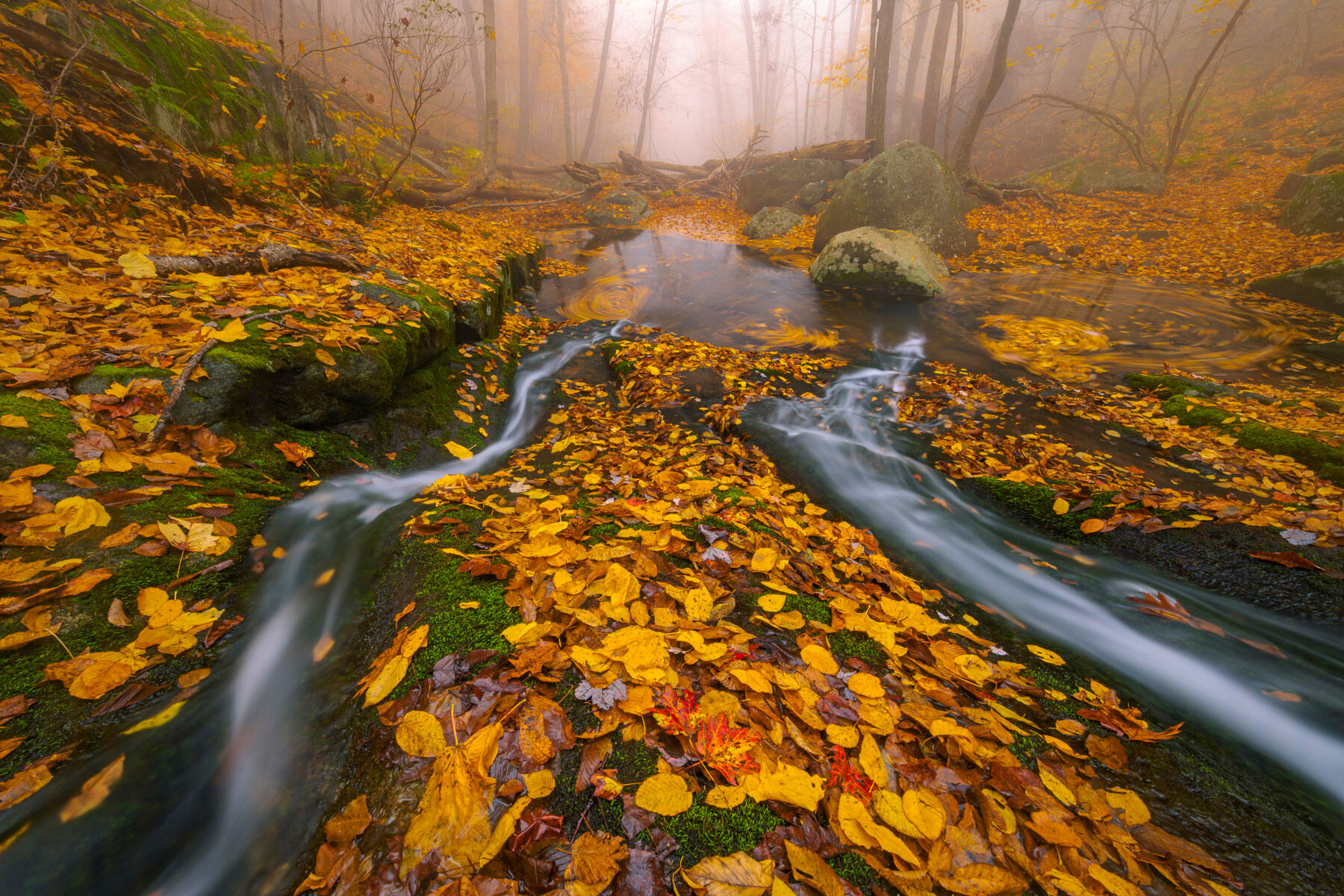
Following a stream or trail without knowing what lies ahead is often where the most rewarding photographs begin. I had no idea what I would find here, but by continuing deeper into the forest I discovered this convergence of flowing water, fallen autumn leaves, moss-covered rocks, and fog—a scene I never could have planned, only encountered by being curious enough to keep exploring.
Shenandoah National Park, Virginia
The landscape is constantly offering alternatives, but we have to remain open enough to recognize them. Some of my most productive days have occurred when the conditions were nothing like what I originally wanted. The photographs came from adapting to those conditions rather than waiting for the landscape to conform to my expectations.
Autumn as an Exercise in Seeing
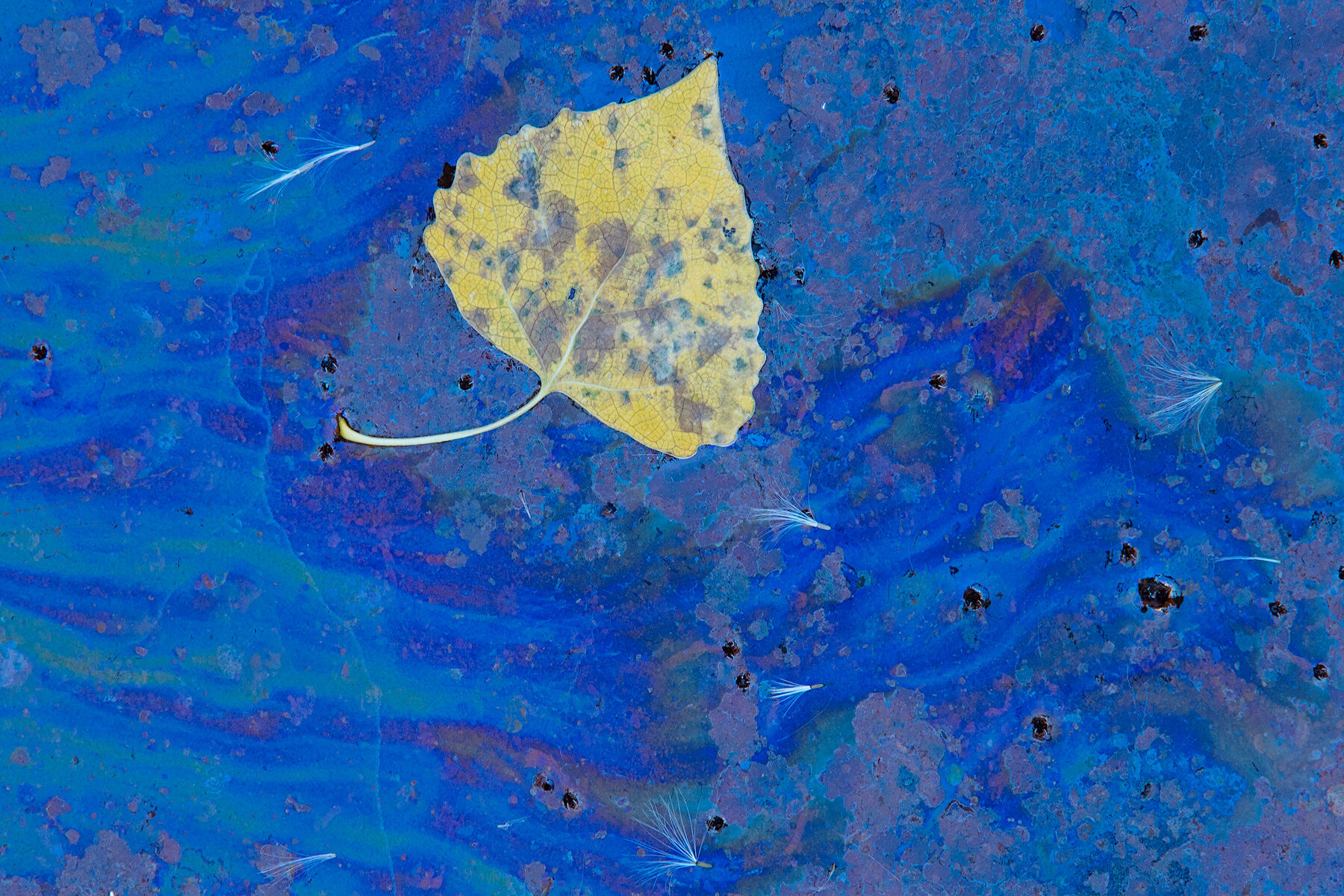
A compelling autumn photograph doesn’t require an epic view. Sometimes it is found in a single fallen leaf, a few subtle textures, and reflected color on the surface of the water. Learning to see means recognizing when these small relationships—color, shape, texture, and negative space—become the landscape itself.
Canyons of the Escalante, Utah
t's easy to understand why photographers chase autumn. The color can be spectacular, the weather is constantly changing and familiar landscapes can look completely different from one day to the next. But color alone isn't enough to create a successful photograph. Some of the most forgettable autumn photographs contain incredible color, while some of the strongest may contain very little. What ultimately matters is how we organize the landscape within the frame and how effectively we communicate what caught our attention.
That's why I think autumn is one of the best seasons for developing your ability to see. It gives us everything at once: grand vistas, complicated forests, changing weather, water, reflections, patterns, color, texture, light and an enormous amount of visual chaos. Within all of that information is an endless collection of photographs waiting to be discovered. The challenge is learning when to stop looking at the entire landscape and begin paying attention to the smaller relationships within it.
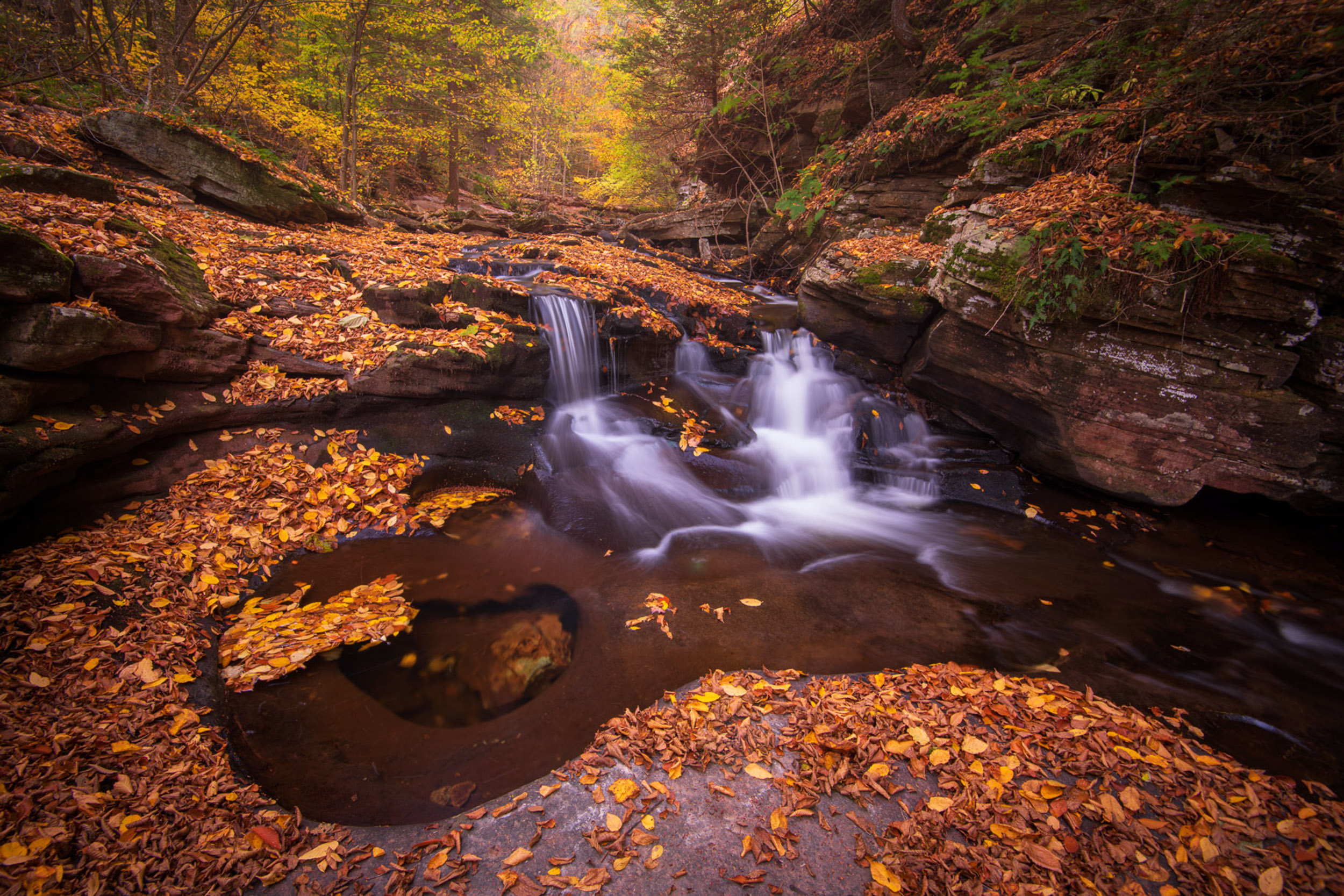
Autumn rewards the photographer who is willing to explore beyond the obvious view. Following a small stream through the forest can reveal an entire composition of flowing water, layered rock, and fallen leaves—proof that compelling photographs are often discovered simply by slowing down, remaining curious, and seeing where the landscape leads you.
Ricketts Glen State Park, Pennsylvania
I might begin a morning photographing mountains and expansive hillsides before gradually moving into the forest. From there my attention may shift toward an individual tree, then a stream, a handful of leaves or a reflection on the surface of the water. Eventually I may be photographing nothing recognizable at all—only color, shape, movement and light. That progression is one of the things I enjoy most about photographing autumn because it continually forces me to change the way I see the landscape.
The deeper we learn to see, the less dependent our photography becomes on spectacular places and perfect conditions. A compelling landscape photograph doesn't always require an epic view. Sometimes it exists on the opposite side of the trail from the famous overlook. Sometimes it's reflected in a few inches of water, hidden among a complicated forest or contained within a single tree surrounded by chaos. Sometimes it's sitting quietly at our feet, waiting for us to notice it.
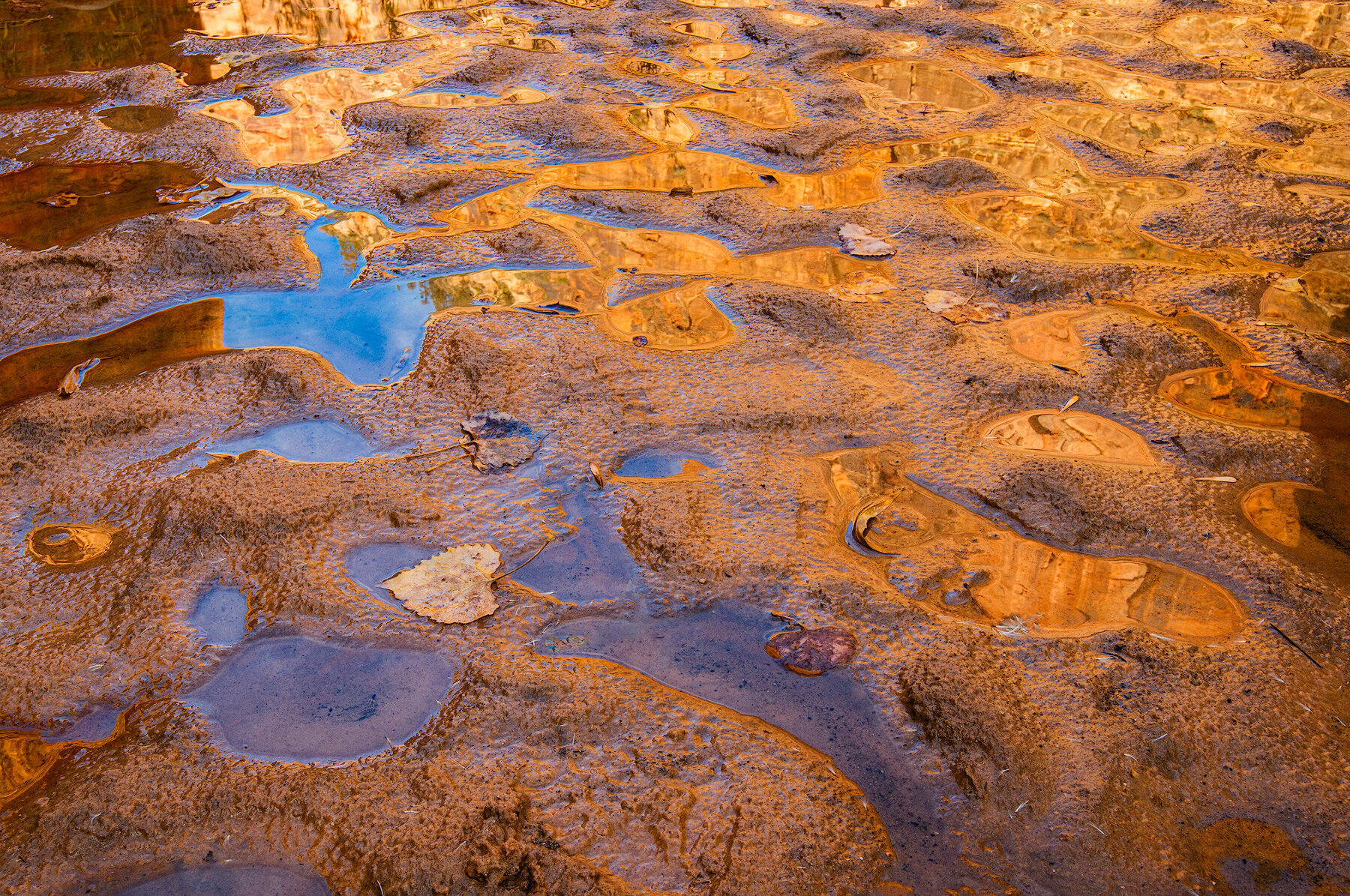
Learning to see often means recognizing when the landscape has stopped looking like a landscape at all. Shallow water, reflected autumn color, exposed textures, and small pockets of blue sky become an abstract arrangement of shape, pattern, color, and light—a photograph that was waiting at my feet rather than on the horizon.
Zion National Park, Utah
For me, that has become one of the greatest lessons of photographing autumn. The season may initially draw us into the landscape with its color, but the real opportunity lies in everything that color encourages us to discover. When we slow down, move beyond the obvious view and allow our attention to travel from the grand landscape toward the smallest details, autumn becomes much more than a season to document. It becomes an exercise in observation, interpretation and learning to see the landscape more deeply.
Photograph Autumn With Me in 2027
f the ideas in this article inspire you to experience and photograph autumn more deeply, I’d love to have you join me in the field during one of my upcoming workshops. All of my 2026 photography workshops are now fully booked, but registration is open for the 2027 workshop season, including several opportunities specifically centered around autumn color. In late September, we’ll photograph the incredible aspen forests, rugged mountains and intimate landscapes of the San Juan Mountains of Colorado, followed immediately by another small-group autumn workshop based in Crested Butte in early October. Later in the season, we’ll shift to an entirely different interpretation of autumn during my Caddo Lake workshops, photographing ancient bald cypress trees, Spanish moss, reflections, mist and the subtle colors of the southern swamp from the water.
Each workshop is designed around the same approach I've discussed throughout this article—responding to light and weather, moving beyond the obvious compositions, and learning to see both the grand landscape and the quieter scenes hidden within it. Several of these workshops are intentionally limited to very small groups and already have registrations, so I recommend reserving early if you'd like to join me. You can explore dates, locations, availability and complete details for the entire 2027 Nature Photography Workshop lineup here: View the 2027 Photography Workshops →