The Overlooked Desert: Photographing Tapestry Landscapes in the Colorado Plateau
The Overlooked Desert: Finding Intimate Landscapes in Desert Washes

When most photographers visit the Colorado Plateau, their attention naturally gravitates toward the grand and iconic landscapes. Towering sandstone cliffs, sweeping canyon vistas, and dramatic desert light are what this region is famous for.
Near Page, Arizona and throughout Grand Staircase–Escalante National Monument, photographers often chase the big scenes—the overlooks, the monumental formations, the postcard views.
But some of the most visually compelling landscapes in the desert exist far from the overlooks.
They live quietly in sandy washes, subtle drainages, and low desert basins where plant communities form intricate natural patterns across the land. These places offer endless opportunities for intimate landscape photography—if you're willing to slow down and look more closely.
Desert Wash Ecosystems
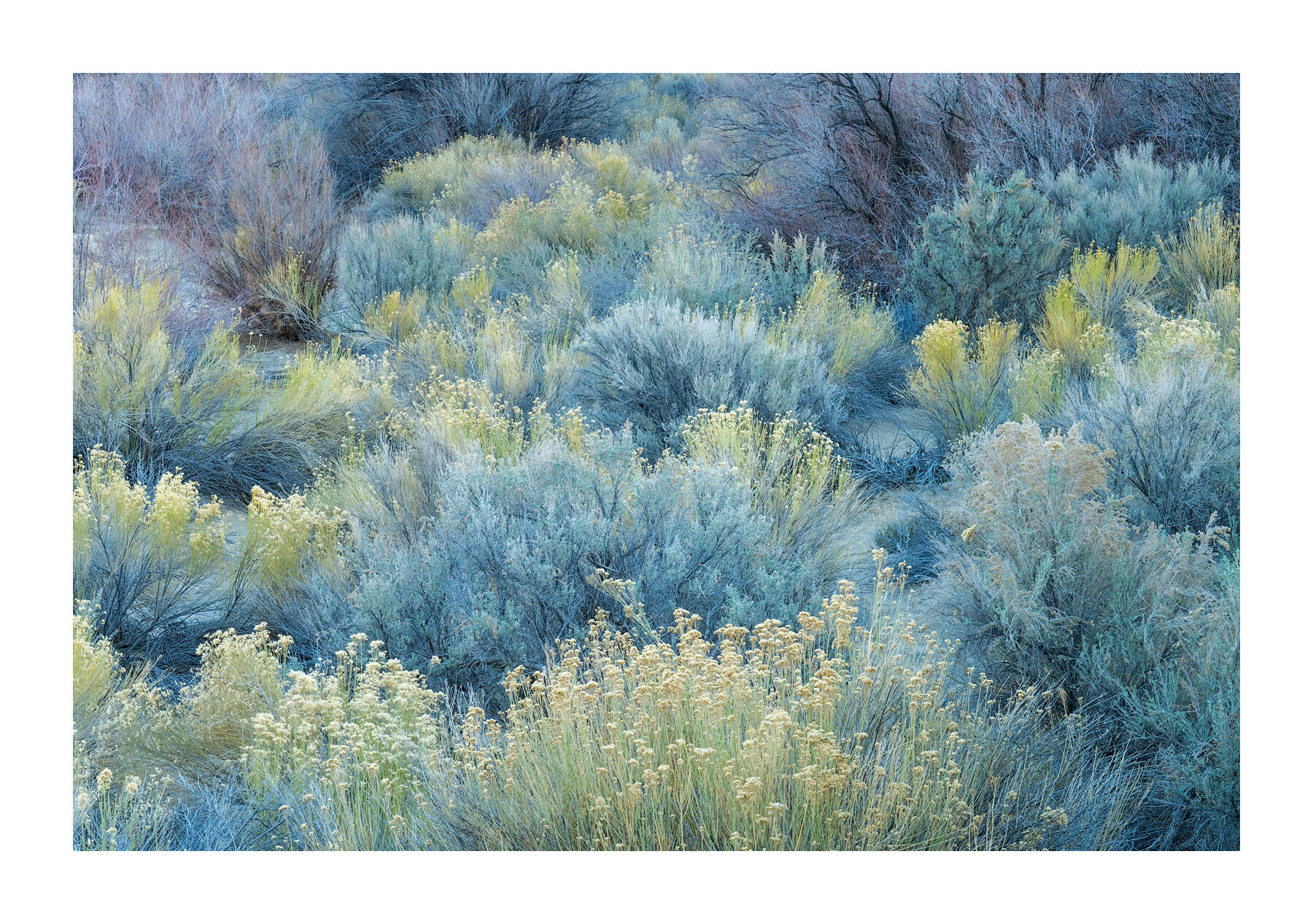
The areas featured in these photographs are part of what ecologists call ephemeral desert wash shrublands.
These environments develop along sandy drainage channels that carry water only occasionally during seasonal rains or flash floods. While moisture is scarce in the desert, these washes provide just enough water and sediment to support dense plant communities.
Common species found in these habitats include:
- Rubber Rabbitbrush (Ericameria nauseosa)
- Fourwing Saltbush (Atriplex canescens)
- Desert Willow (Chilopsis linearis)
- Mormon Tea (Ephedra viridis)
- Desert bunchgrasses such as Indian Ricegrass
Over time these plants establish themselves in clusters and thickets that stand out against the surrounding desert floor.
A Natural Vegetation Mosaic
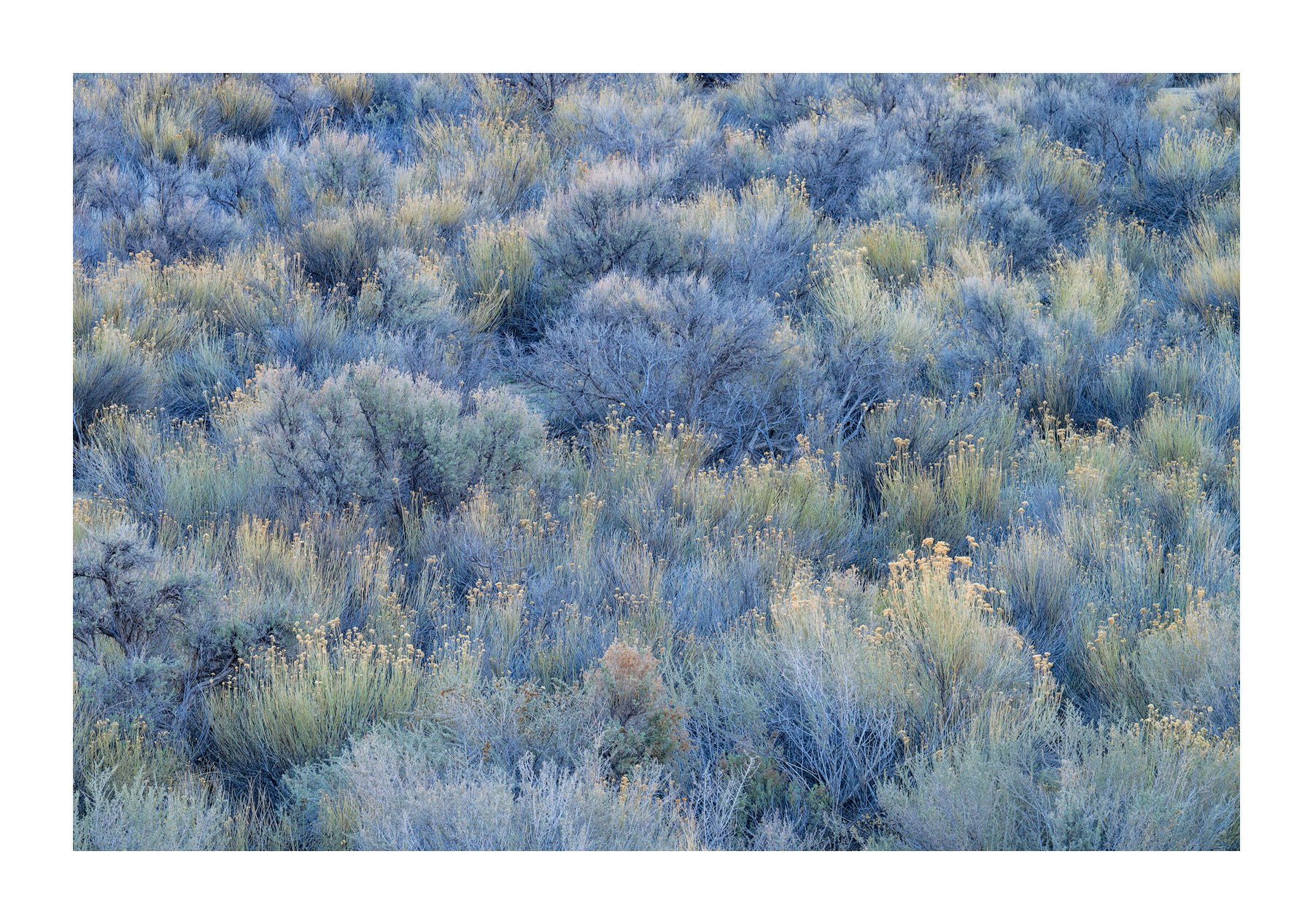
One of the most fascinating aspects of these habitats is how plants organize themselves across the landscape.
Ecologists often refer to this structure as a vegetation mosaic.
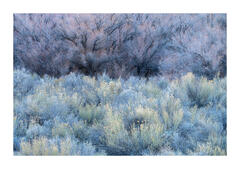
Slight variations in soil moisture, sediment depth, and past flooding events allow different plants to establish in small patches. As shrubs mature they trap wind-blown sand and organic material, creating small ecological islands where additional plants can grow.
The result is a repeating pattern of:
• shrub clusters
• grass hummocks
• open sandy spaces
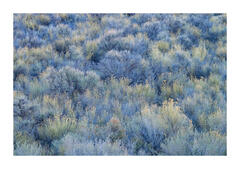
Across the desert floor, these patches form a natural mosaic shaped by water, wind, and time.
For photographers, this pattern provides an incredible foundation for composition.
A Tapestry Landscape

From an artistic perspective, these scenes function very differently from traditional landscape compositions.
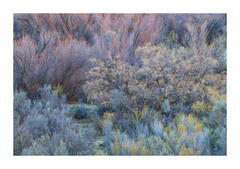
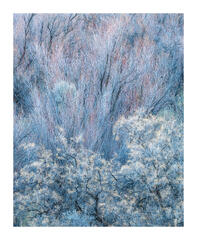
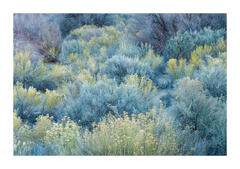
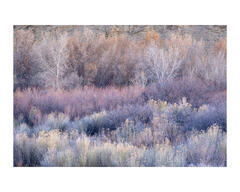
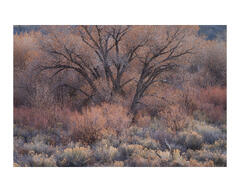
Instead of relying on a dramatic foreground and distant background, these environments create what artists often describe as a tapestry landscape.
The composition becomes a woven field of color, texture, and repeating form.
Rather than focusing on a single subject, the image is built from:
- repetition
- subtle color shifts
- layered textures
- visual rhythm
The viewer's eye moves through the scene much like it would through a painting or textile.
The Magic of Winter Desert Light

Many of these images were made in winter, when desert light becomes softer and more nuanced.
In shaded desert environments the sky acts like a giant blue reflector, casting cool tones across the vegetation. At the same time, rabbitbrush seed heads and dry grasses introduce warm highlights of gold and straw.
This combination creates an incredibly subtle color palette:
- soft blues
- muted greens
- silvery grays
- pale yellows
- warm rust tones
These tones often go unnoticed until you begin isolating sections of the landscape with a longer focal length.
Slowing Down in the Landscape
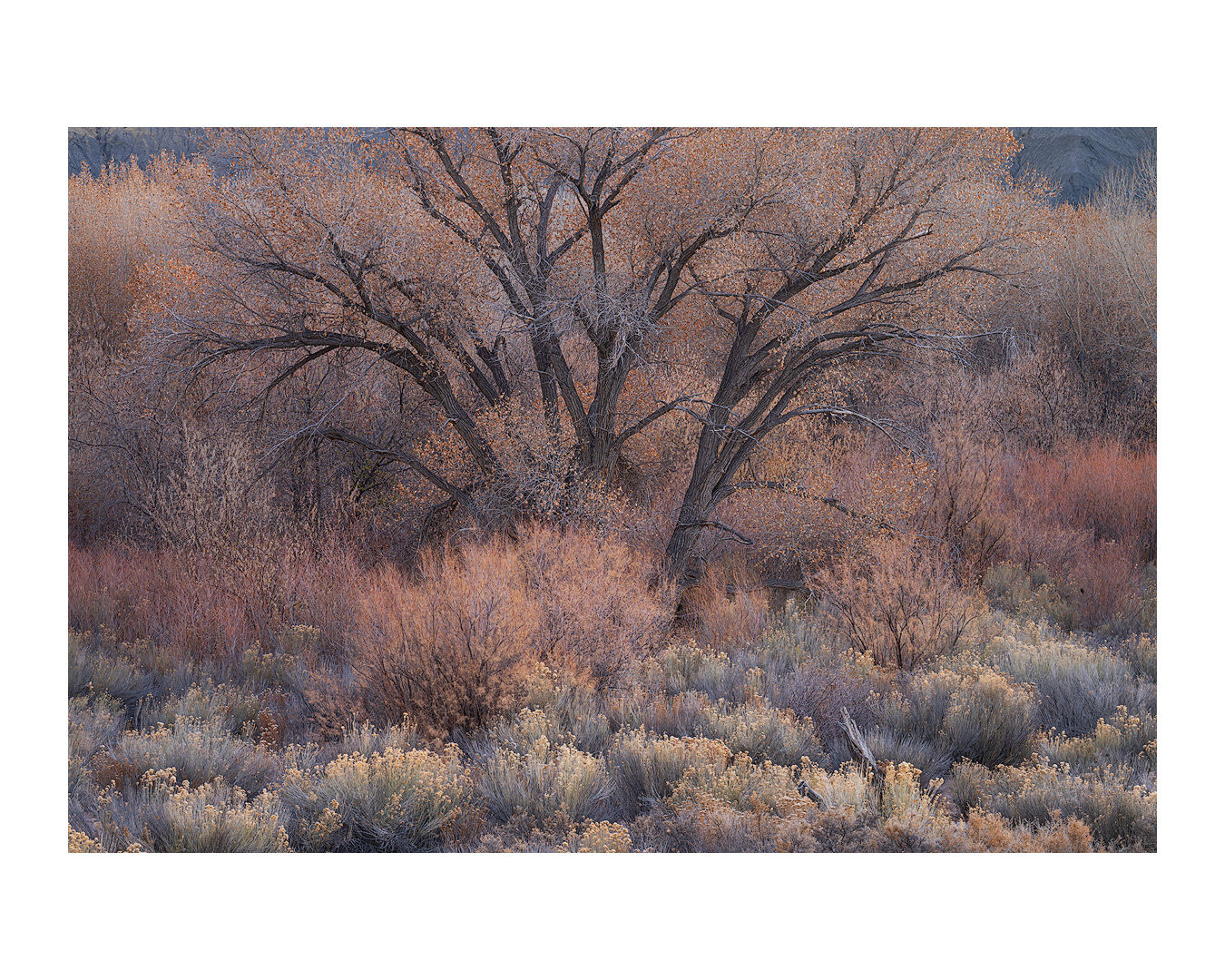
Photographing environments like this requires a different mindset than chasing iconic locations.
Instead of searching for the grand vista, the process becomes one of observation. You begin to notice how light interacts with texture, how plants organize themselves across the terrain, and how patterns emerge from what first appears to be visual chaos.
These quiet desert washes reward patience and curiosity.
They encourage a slower, more contemplative approach to landscape photography.
A Different Way of Seeing the Desert
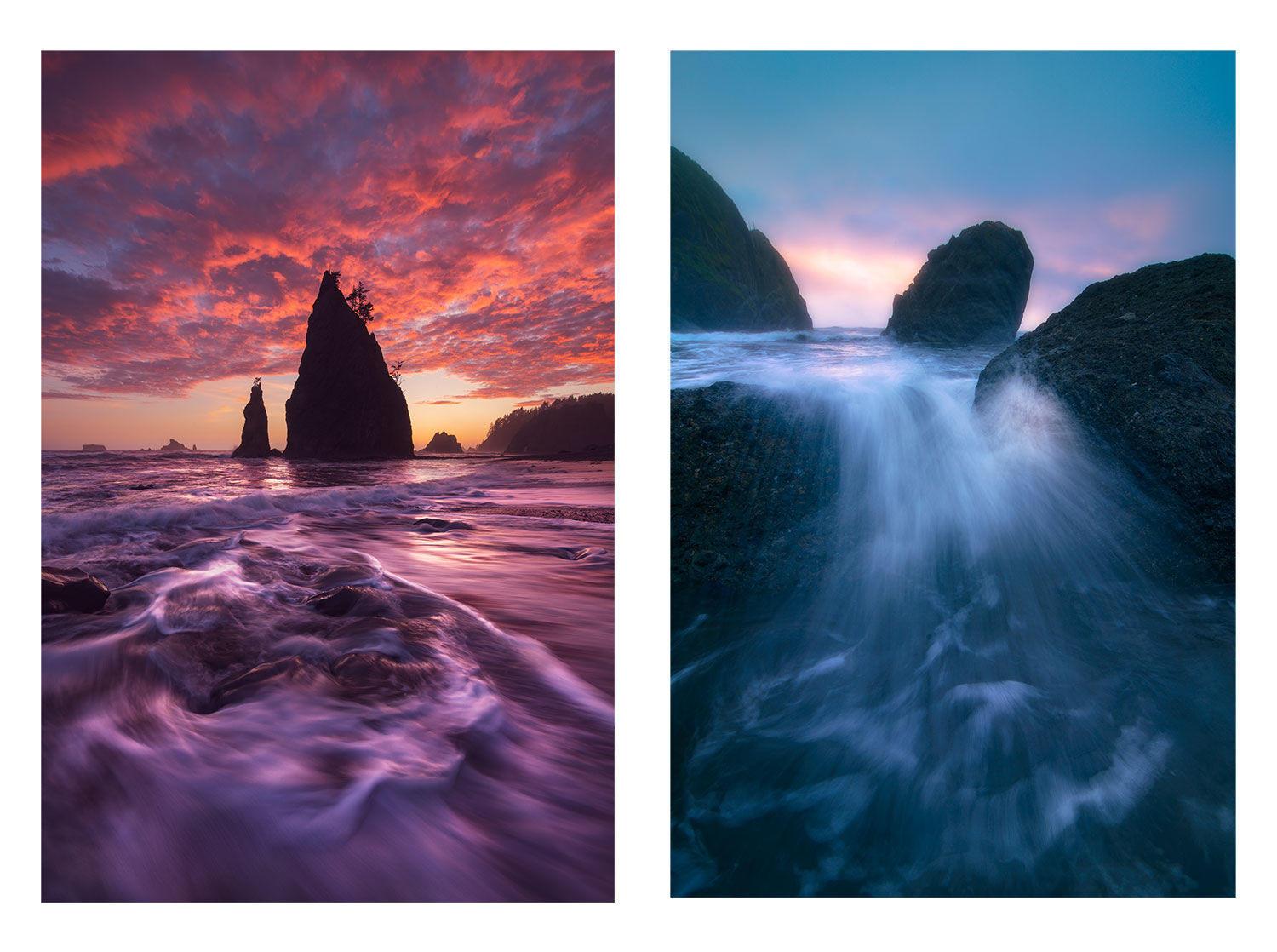
The desert is often celebrated for its monumental scale.
But within its washes and lowlands exists another kind of beauty—one defined by complexity, subtlety, and ecological rhythm.
For photographers willing to explore beyond the obvious scenes, these habitats offer endless opportunities to create images that feel intimate, painterly, and deeply connected to the natural processes shaping the land.
Sometimes the most powerful landscapes are the ones that simply ask us to slow down and look closer.